

This article was contributed by Andrew, Head of Content at MobiLoud, a mobile app and push service for ecommerce brands on Shopify, BigCommerce, Magento and all other ecommerce platforms.
Push notifications have quietly become ecommerce's most powerful and most underutilised growth channel.
While every brand is fighting the same battles in email, SMS, and paid media, push remains wildly unsaturated, despite outperforming nearly every channel on a user for user basis.
And with the rise of AI, better automation, richer formats, and wearable-first experiences, 2026 ushers in a completely new era of what push can do. For brands who want to generate more revenue with less ad spend, launching an app and unlocking push notifications has to be a priority.
Keep reading for the top trends in push marketing for 2026.
Trend #1: Personalisation First
For years, brands have talked about “personalisation,” but most push strategies still look like 2018: one message, blasted to everyone.
In 2026, that won’t cut it. As more brands start relying on push as a core communication channel, and users are receiving a greater number of notifications, the bar is getting higher.
People expect hyper-relevant notifications today.
- Drop and promo alerts for products they’re actually interested in
- Recommendations tied to their individual preferences (sizes, styles, replenishable items)
- Push timing centred around the time they’re most likely to shop
The floor is rising fast. At a bare minimum, brands should stop sending batch-and-blast messages. But the ceiling is rising too: the most successful ecommerce teams are already sending ultra-personalised pushes and achieving incredible results.
This is where push becomes unfairly effective, compared to traditional retention channels; when every notification feels like a message written for the customer, not at them.
Trend #2: Rich Push Notifications
Push notifications already remove friction; one tap and your customer is in your app. But rich push takes that further by turning the notification itself into the experience.
In 2026, the brands seeing the strongest results will be treating push like a mini magazine spread on the customer’s lock screen.
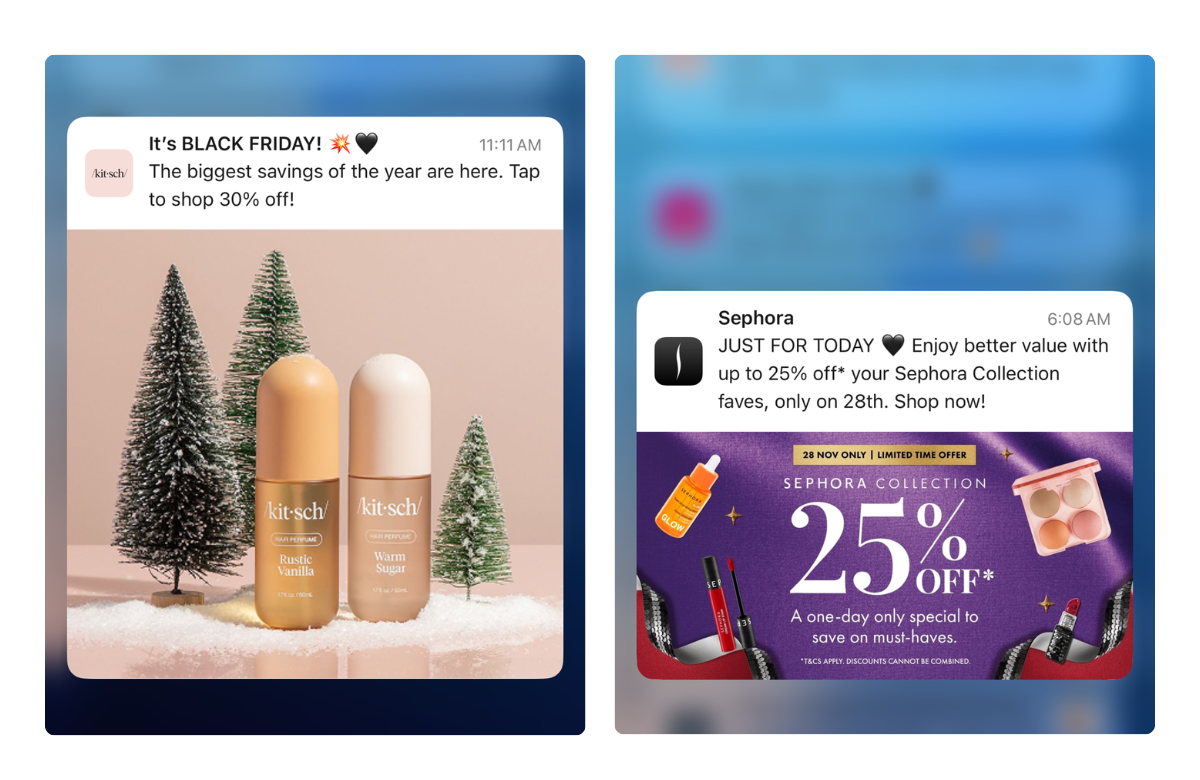
Kitsch and Sephora both lean heavily on rich push during BFCM
Images, GIF-style slideshows, and rich media previews let shoppers see the drop, the new arrivals, or the promo before they even open the app.
Why this matters:
- It collapses the funnel. A rich push can do 60% of the selling before the user taps.
- It boosts engagement. Visual notifications stand out instantly in a sea of plain text.
- It drives discovery. Shoppers can preview collections or products with a long tap. No friction, no tabs.
- It's perfect for launches and limited drops. Urgency + visuals = taps and conversions.
In short: rich push turns your notifications into creative, high-impact micro-ads - without paying for impressions.
Trend #3: Push Notifications That Don’t Sell
For a long time, every push notification had one job: drive a sale.
But as push becomes more central to a brand’s relationship with its customers, the smartest brands have realised something counterintuitive:
Not every push notification should be transactional.
Your customers have dozens of apps installed. Even people who love your brand can forget about you in the noise. Non-sales pushes work because they keep your brand top-of-mind without asking for anything in return.
They create presence. They build affinity. And over time, that trust compounds into higher retention and more revenue, even if the individual notification didn’t promote a product.
Examples that work exceptionally well:
- A quick “Hope you’re having a rockin’ Wednesday” moment
- A behind-the-scenes update
- A community milestone
- A brand-relevant quote, meme, or lifestyle touchpoint
- A seasonal message that fits your vibe
- UGC or customer shoutouts
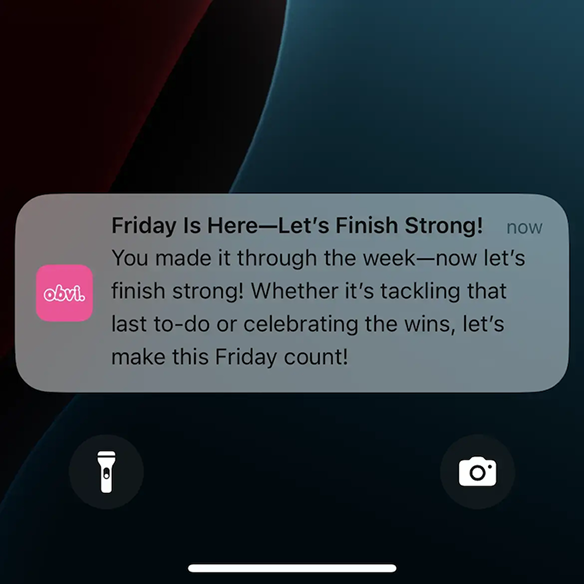
Obvi’s app is a great example of awareness-driven push notifications
This approach works best for lifestyle brands with a tribe-like community, typically in beauty, fashion, fitness, wellness, outdoor. They’re not just selling products; they’re selling identity and belonging. And push becomes a lightweight, human way to stay connected.
The key rule: Be the brand customers are happy to hear from; even when you’re not selling.
It’s that consistency that keeps you in their mental rotation, ensuring your next sales-driven push lands harder.
Trend #4: Wearable-Optimised Push Notifications
Push notifications don’t just live on phones anymore. In 2026, a huge and growing percentage of them are getting read on wrists.
Apple Watch, Garmin, Fitbit, and other wearables have become default notification surfaces. That means your beautifully crafted message is often being skimmed in a half-second glance on a tiny screen… while your customer is walking, working out, commuting, or in a meeting.
Most brands don’t realise this, let alone optimise for it.
Wearable-optimised push is now a real competitive edge because it forces clarity, brevity, and instant relevance. The brands leaning into this trend are crafting pushes that land in 3–5 words, with the rest optional.
What matters most:
- Lead with the punchline. Your first 3 words need to carry the entire message.
- Short > clever. On a wearable, clarity beats wit every time.
- One idea per push. No multi-part messages - single, simple concepts win.
- Format for scanability. Avoid long sentences; think headlines, not paragraphs.
Examples of wearable-first copy:
- “New drop live.”
- “Back in stock.”
- “Your size is here.”
- “Price drop.”
- “Order update.”
It’s not that you can’t send longer messages, or include rich media in your pushes. But think about whether the message will capture your customer’s attention if it shows up on their watch.
The shift is subtle but powerful: as wearables become notification hubs, your push strategy has to adapt.
The brands optimising for wrist-first consumption will see higher open rates, more taps, and fewer missed moments.
Trend #5: Lifecycle & Behaviour-Driven Automation
For years, push notifications were treated like a mini version of email: pick a day and time, write a message, hit “send to all.”
That strategy (if you can call it a strategy) is done.
In 2026, the highest-performing push programs are almost entirely automated, behaviour-driven, and context-specific. Not because it’s trendy; but because that’s where the revenue is.
Push works best when it shows up at exactly the right moment, triggered by something the customer just did (or didn’t do). These messages land with far higher intent than anything scheduled on a calendar.
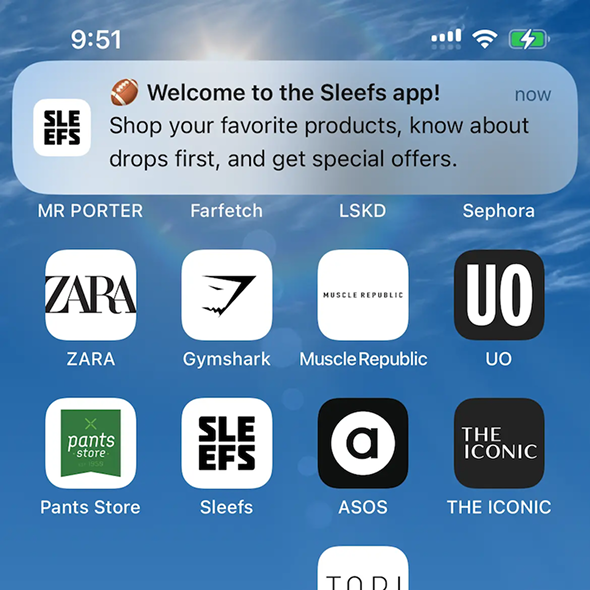
Sleefs is a great example of a welcome push prompting new users to open up and shop
The most impactful automations include:
- Welcome flows: Crucial for getting new app users to their first purchase fast. A strong push in the first 24 hours can double conversion.
- Browse abandonment: “Still thinking about these?” push messages consistently drive high tap-through rates.
- Wishlist/price drop alerts: A must for fashion, beauty, and lifestyle brands where buying is impulse-driven.
- Back in stock: Often the single highest-converting push notification a brand sends.
- Abandoned cart: The king of push notifications - fast, timely, and ridiculously effective. If you only run one automation, this is the one.
Lifecycle push turns your app into an always-on revenue engine: capturing demand, nudging users at the perfect moment, and making every customer feel like the brand is one step ahead.
Trend #6: Opt-In Optimisation
Push notifications are incredibly powerful; but only if your customers actually allow them.
The truth is, your push strategy is only as strong as your push opt-in rate.
Both Apple and Android require explicit permission, and the default system prompt rarely does the job on its own. That’s why high-performing brands now obsess over optimising the opt-in moment, because even a 5–10% lift in permission rates can translate into massive revenue over the course of a year.
The key shift is moving from “Can we send you notifications?” to:
“Here’s the value you get if you say yes.”
Top brands are now:
- Using pre-permission screens that match their brand aesthetic
- Highlighting push benefits: early access, exclusive drops, price-drop alerts
- Framing opt-in as joining a VIP club vs. agreeing to be marketed to
- Timing the opt-in request for after a moment of engagement (not immediately on launch)
- Testing multiple message angles to find the highest-converting pitch

The Sportsfuel app makes the case in their opt-in prompt for why you should enable push
Push permission is a revenue multiplier. Every person who opts in becomes part of a high-intent, zero-cost channel.
A 10% improvement in opt-ins can lead to a double-digit lift in total app-driven revenue, with zero extra spend.
Watch successful brands make push opt-in rate one of their top strategic KPIs.
Conclusion: 2026 Is the Year to Go All-In on Push
While email and SMS get noisier, more competitive, and more expensive every year, push remains the exact opposite: zero cost per send, instant visibility, and an audience of customers who want to hear from you.
And here’s the wild part. Only about 4.5% of 7-figure ecommerce brands even have a mobile app.
That means the push channel, arguably the most direct communication line to your best customers, is practically unsaturated.
The window where push is underused, underpriced, and overflowing with opportunity won’t last forever.
If you’ve been thinking about launching an app or improving your push strategy, 2026 is the year to make it happen. The brands that invest now will build deeper relationships, drive more repeat purchases, and lock in a retention advantage that compounds month after month.

Skyrocket your Shopify sales with a no-code Apple & Android mobile app. Available now on the Shopify app store.







.webp)

