

Increasing your average order value (AOV) is one of the most efficient ways to grow your Shopify store because instead of constantly chasing new customers, you’re simply getting more value from the ones you already have.
The good news is, you don’t need a complete overhaul to make it happen. Small, well-placed changes to your store experience can have a big impact on how much customers spend per order. From how you present products, to when and where you make offers, a few smart strategies can quickly add up.
In this guide, we’ll break down five proven ways to increase AOV:
- Get a mobile app for your Shopify store
- Use upsells, cross-sells, and bundles effectively
- Set up free shipping (and free gift) thresholds
- Turn buyers into repeat spenders with a loyalty program
- Use post-purchase communication to drive additional revenue
Let’s get right into it…

1 - Get a Mobile App For Your Shopify Store
One of the best ways to increase AOV is simply giving your customers a better place to shop - and a dedicated mobile app for your Shopify store does exactly that.
A recent study found that brands achieve anywhere from a 10% to 120% increase in average order value, along with 40% to 1000% higher conversion rates in-app compared to web. That’s a huge jump.
What makes mobile apps so effective at increasing AOV? A lot of it comes down to removing friction and making it easier (and more enjoyable) to buy.
Faster, smoother checkout experience
Mobile apps streamline the entire buying process. Compared to a mobile browser, there’s less waiting, fewer distractions, and a much smoother checkout flow. When customers can pay quickly - especially with preferred options like Klarna, Afterpay, or saved card details - they’re far more likely to complete their purchase and even add a few extra items along the way.
Personalized product recommendations
Mobile apps are great at using customer behavior to their advantage. As users browse, click, and buy, the app can surface highly relevant add-ons, bundles, recently viewed items, or complementary products. This kind of personalized shopping experience naturally increases AOV without feeling overly pushy.
High-converting push notification campaigns
Push notifications instantly land on your customers’ devices like a text message, making them hard to miss. That means you can promote upsells, special deals, or complementary products at exactly the right moment. Even better, they can be precisely targeted - so customers only see offers that genuinely match their interests.
Saved preferences and payment details
Returning customers don’t want to start from scratch every time they make a purchase. If they’re using your app, their details are saved, making checkout incredibly quick. Less friction at checkout means fewer abandoned carts and higher order values.
Exclusive in-app offers and bundles
Shopify mobile apps also give you the opportunity to create “app-only perks” - for example exclusive bundles, tiered discounts, or special offers that reward higher spend. These incentives make customers feel valued and special, which subtly encourages them to increase their basket size without feeling forced.
Put simply, a Shopify mobile app makes it easier for customers to browse, buy, and come back again. And when shopping becomes streamlined and feels more personalized, customers don’t just buy more often, they tend to spend more per order. This combination of smoother checkout, better recommendations, and stronger retention is what ultimately drives higher order values in-app.
Learn more about why you need a mobile app for your Shopify store in 2026.

2 - Use Upsell, Cross-sell, & Bundle Strategies
Upsells, cross-sells, and bundles are all strategies designed to increase the value of each order by encouraging customers to add more (or better) items during their shopping journey. For example, that could be upgrading a product, adding complementary items, or buying a bigger bundled deal.
If you want a reliable and sustainable way to increase AOV, this is one of the most effective areas to focus on. It’s important to remember though that these strategies are more than just adding offers or complementary products everywhere, it’s about placing the right ones at the right moments in the shopping journey.
Product page upsells
This is where the buying decision is happening, so it’s a prime spot to suggest a smarter upgrade. Think along the lines of getting a customer to upgrade to the deluxe version of a product for just $10 more or adding extra warranty to their purchase for extra peace of mind.
When done well, product page upsells can increase AOV and revenue by 10-30%.
Product page cross-sells
Cross-sells work best when they feel genuinely useful - if it feels helpful and relevant, it converts. In fact, a McKinsey study highlighted that cross-selling can account for up to 35% of a company’s sales, which shows just how powerful this can be.
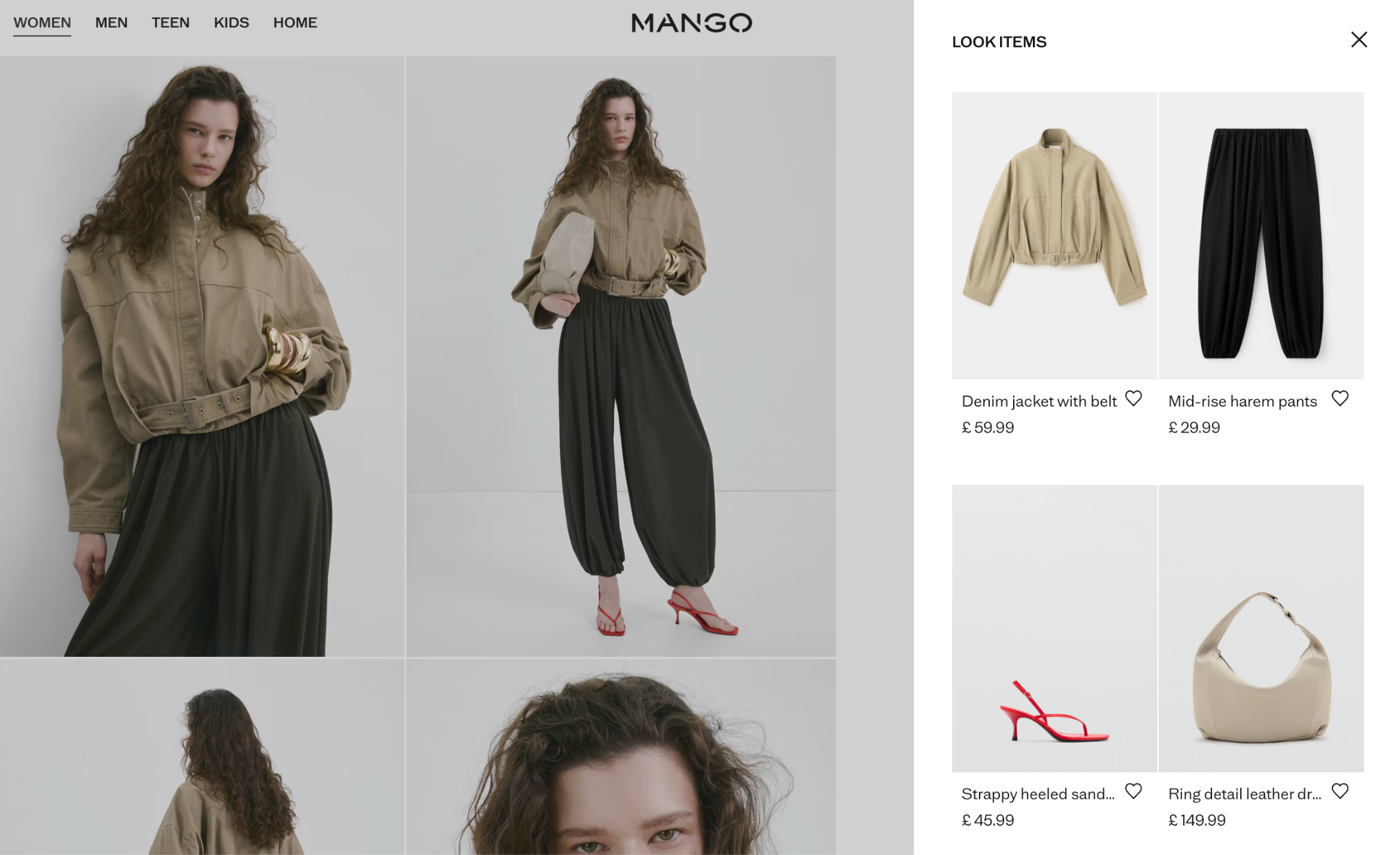
To cross-sell on your product pages effectively, place complementary products directly under or beside the main item, for example, if the product is a beach bag, the recommended items might be sunglasses or a sun hat. Many fashion stores use a “Shop the Look” feature for their cross-selling strategies, where customers can instantly add everything the model is wearing to their basket, just like Mango have done here:
Cart page add-ons
The cart is a great place to include small, but valuable, add-on offers. These are usually practical items like: socks for a shoe purchase or makeup brushes for a beauty purchase. They’re simple suggestions, but they work because the customer is already in the buying mood and the suggestions are relevant to what they are about to purchase.
Checkout page last-minute upsells
At checkout, it’s all about light-touch, impulse-friendly offers. Some popular options include gift wrapping, expedited shipping, or a small discounted add-on. Nothing that slows the checkout process down, just easy yes-or-no decisions that can boost AOV at the final moment.
Bundle offers
Bundles are one of the strongest AOV levers, with research showing they can improve conversions by 20-30%.
They are simple but effective: package related products together with a clear saving compared to buying them individually. Even if a shopper arrives on your store intending to buy just one item, a well-presented bundle can quickly shift perception of value and encourage a higher spend.
Post-purchase upsells on the ‘Thank you’ page
By no means does the shopping journey end at checkout! The thank you page is a super effective place to capture extra revenue. Offers like “Add this item to your order in the next 10 minutes - no extra cost” work because the customer has already committed and is still in a buying mindset.
The main rule across all of these strategies is to keep it relevant, timely, and subtle. Shoppers respond far better to a few well-placed, genuinely valuable offers rather than being overwhelmed by too many distractions.

3 - Highlight Free Shipping Thresholds
This is one of the simplest strategies to increase Shopify AOV out there - but it’s also one of the most important. 80% of customers are willing to meet a minimum spend threshold to unlock free shipping.
Let’s be honest, nobody wants to pay for shipping. I know I’d rather add a $6 pair of socks to my basket to qualify for free delivery than pay a $4.99 shipping fee.
That’s exactly why this tactic works so well: you’re essentially trading a small perceived “loss” (shipping cost) for a slightly higher basket value. And while the concept alone is powerful, there’s a few smart ways to make it even more effective:
Dynamic progress bar
Adding a dynamic progress bar across your store is one of the most visually persuasive formats. You could use a slider to show customers exactly how close they are to free shipping, for example: “You’re only $8 away from free delivery”. When customers can clearly see that they are nearly at the threshold, it becomes like a goal or target for their spending.
Product page reminders
Reinforce the incentive earlier in the journey so customers are aware of the free shipping threshold before they even reach checkout. A simple line of copy like “Free delivery on orders over $50” on the product page can subtly influence basket size from the start.
Announcement bar / sitewide header
Keep your threshold visible across your entire website and Shopify mobile app with a sticky banner. The more consistently customers see it, the more likely they are to plan their spend around it.
Checkout page reinforcement
At the final stage, remind customers about what they’ve achieved. Messaging like “You’ve unlocked free shipping 🎉” adds a small moment of satisfaction right before payment, which can also improve customer satisfaction, retention, and repeat purchases.
Email & push notification follow-ups
This is especially effective for abandoned carts. If a shopper abandons their cart but is just below the threshold, a simple reminder like “You’re only £6 away from free shipping - complete your order now!” can bring them back and increase conversion.
Free gift thresholds
This is a variation of the same idea, so it’s also a super valuable strategy. Instead of, or even alongside free shipping, you could offer a free gift when shoppers hit a certain spend level.
For instance:
- Spend $25 and get 1 free gift
- Spend $45 and get 2 free gifts
The psychology behind this AOV strategy is strong: customers are getting something extra for their spend, and that perceived bonus value makes it much easier for them to justify adding more items to their basket.
Both free shipping and free gift thresholds work because they reframe spending. Instead of “I’m spending more”, it becomes “I’m unlocking more value”.
4 - Implement a Loyalty Program
Loyalty programs are one of the most fun, engaging, and comprehensive ways to increase average order value with 75% of consumers are willing to buy more products when they’re part of a loyalty program.
Unlike quick-win tactics that only grow Shopify sales temporarily, a well-designed loyalty program is sustainable because it brings long-term customer retention. It gives people a real reason to keep coming back, and a reason to spend a little more each time.
Many popular loyalty programs allow customers to earn points with every purchase (for example, 1 point per $1 spent), which they can later redeem for rewards. But the real AOV impact comes from progression.
If a customer is close to reaching the next or VIP loyalty tier, or unlocking a better reward, they’ll often add an extra item just to get there. Customers often reason that spending $10 more today can feel worth it if it gets them significantly more value later.
Customers love earning points, unlocking rewards, and moving closer to the next loyalty tier, and this naturally encourages higher basket sizes without needing hard selling.
For it to actually work, though, the experience matters just as much as the structure. A good loyalty program should be:
- Fun and engaging rather than transactional
- Simple and easy to understand (no confusing rules or maths)
- Achievable and attainable, so customers feel like rewards are within reach
- Genuinely valuable, not gimmicky discounts nobody cares about
- Personalized, so rewards feel relevant to individual shoppers
- Aligned with customer behaviours and preferences, not just the offers the brand wants to push
When all of that comes together, a loyalty program stops being just a points system and becomes a consistent driver or repeat purchases and higher average order values over time.
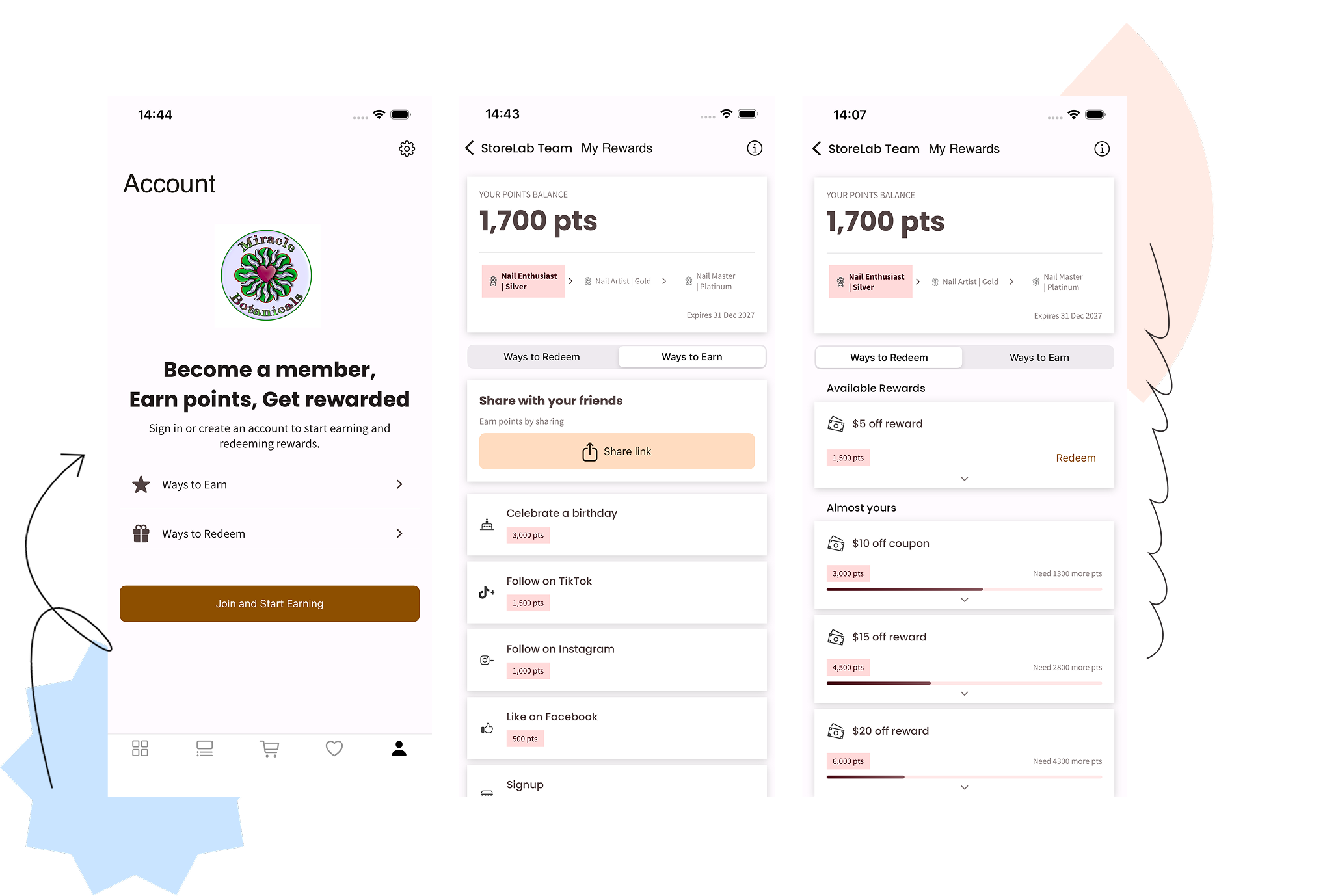
Above is an example of the Miracle Botanicals loyalty program within their StoreLab mobile app - a loyalty experience that’s designed to be engaging, easy to understand, and intuitive for customers. Fancy your own app like Miracle Botanical’s? Get in touch with our mobile experts today to learn more!
.webp)
5 - Post-Puchase Communication
Post-purchase communication happens after the initial purchase; the idea behind this strategy is slightly different. Instead of trying to increase basket size while the customer is still deciding if they even want the product, you take an alternative approach and do it afterwards - once they’ve already bought, when the buying momentum is still there, and they’re looking forward to receiving their order.
Studies show that post-purchase upselling communications can lead to a 5.6% uplift in AOV, which is a nice boost.
At this stage, suggestions should feel helpful, not pushy. They just need to add genuine value to what the customer has already bought. For example, if someone purchases a new pair of running shoes, you could use a message like “Did you miss this?” and show a waterproof shoe protector spray, with a simple offer such as “You can still add this to your order for the next 10 minutes.”
From there, there are a few key touchpoints that work particularly well:
Shipping & delivery updates
Keep engagement high between purchase and delivery with subtle, relevant recommendations. For example: “While you wait, customers who bought this also loved…” This keeps the brand front of mind without feeling sales-heavy.
Post-delivery follow-up email
Once the customer has received and used the product, this is a great moment to continue the conversation. Messages like “How did you like it? Here are accessories to help you get even more value” feel natural because they’re based on real product experience.
Replenishment reminders
For consumable or repeat-use products, lifecycle-based messaging is very effective. Something like “Running low? Restock now and try our bundle” helps bring customers back at exactly the right time, and often increases order value through bundles or upgrades.
The important thing here is timing and relevance. These messages work because they arrive after the purchase decision, when customers are still engaged with the brand rather than trying to decide whether to buy.
It’s worth noting that 90% of consumers say the post-purchase experience is just as important as product quality. So this stage isn’t just about increasing AOV, it’s also about reinforcing satisfaction while naturally opening the door to future, higher-value purchases.
Final Thoughts
Here at StoreLab, we’ve seen firsthand that increasing average order value is crucial for achieving sustainable, long-term Shopify revenue growth. That’s why boosting AOV is a core part of our strategies and services - we see it as one of the key cornerstones of growth within the StoreLab CAR framework.
The CAR framework is designed to help Shopify stores grow by focusing on three core metrics:
- Conversion Rate - the percentage of visitors who actually make a purchase
- Average Order Value (AOV) - how much customers spend per order
- Returning Customer Rate - how many customers come back to buy again
To explain, conversion rate and AOV work closely together: if both are low, it’s very difficult to generate meaningful profit. They also play a huge role in shaping how effectively you can scale your advertising. Returning customer rate, on the other hand, is what drives long-term profitability, especially when it costs significantly less to retain a customer than to acquire a new one.
Together, these three metrics give you a clear, actionable view of your store’s overall performance and growth potential.
That’s why we’ve built services specifically around improving AOV, including mobile app development, bundling and cross-sell logic, in-cart and post-purchase optimization, pricing and offer architecture, and more.
Because when you get AOV right, everything else becomes a lot easier to scale.
To learn more about our Shopify Growth Service, feel free to book a call with one of our friendly experts! We’d love to learn more about how we can help your brand reach its full potential.

Skyrocket your Shopify sales with a no-code Apple & Android mobile app. Available now on the Shopify app store.







.webp)

