

Wow, it’s that time of the year again already? Well, not quite - but it is time to start prepping. With June here, Black Friday is around 6 months away, and while that might feel like plenty of time, the Shopify stores that see the most success are the ones that start planning early.
The end of the year is packed with major shopping events, so getting ahead with your preparation gives you more time to build a stronger strategy, get ahead of competitors, and avoid feeling overwhelmed when everything comes all at once.
This doesn’t mean launching your promotions months in advance. Instead, it’s about using this time wisely - building warm audiences who are ready to shop with you when the time comes, testing what works, and finding opportunities to maximize revenue, conversions, AOV, and retention - the key metrics that drive Shopify growth.
By preparing now, you’ll be in a much stronger position to make the most of Shopify Black Friday Cyber Monday when it arrives. In this guide, we’ll cover 10 strategies you can start putting in place NOW. Let’s jump right in…
.webp)
1. Average Order Value (AOV) Optimization
One of the most effective ways to prepare for Shopify Black Friday Cyber Monday is increasing your average order value ahead of time, so you’re getting more revenue from the same level of traffic. The focus is on gently encouraging customers to add more to their basket by improving perceived value and structuring your offers more strategically.
A great starting point is to start prepping these offers early and even test a few variations to see which will perform best during Black Friday itself.
Product bundling is one of the strongest areas to focus on here. “Frequently Bought Together” style bundles can naturally shift customers from purchasing a single item to buying a set. For example, someone viewing a skincare product might be shown a curated bundle that includes that product as part of a complete set, offered at 20% less than the cost of buying each item individually. Highlighting the value of your best bundle offers directly on product pages also helps draw attention to them at the right moment.
Tiered discounts are another simple but effective tactic to test before the main event. Offers like ‘spend $50 and get 10% off’, or ‘spend $100 and get 20% off’, encourage customers to increase their basket size to reach the next threshold, often by adding just one more item. Testing different thresholds beforehand can help you identify the sweet spot that grows AOV through maximizing value from your existing customers.
It’a also worth setting up checkout add-ons such as small accessories for fashion brands or insurance plans for jewelry stores. These work well because they’re valuable and persuasive, and appear at a point where customers are already committed to buying, making it easier to increase basket size without disrupting the checkout flow.
Post-purchase upsells are a very underrated strategy for increasing Shopify AOV. They appear on the thank-you page immediately after checkout, for example, where customers can add an additional product to their order within 20 minutes without going through the full checkout process again. Fashion brands might offer a tote bag as a post-purchase upsell at a slightly discounted price. Because the purchase has already been completed, any extra offer feels optional and low-pressure, and customers are already in the buying mindset.
In the lead-up to BFCM, this space is useful for testing different product pairings, pricing, and messaging to see what performs best. You can then take the strongest combinations and tailor them specifically for your post-purchase Black Friday page, so the most effective offers are ready to go.
Consider adjusting your free shipping threshold slightly above your current AOV in the months and weeks leading up to BFCM. Customers will naturally start adding more to their basket to reach that threshold, which helps lift average order value way before the weekend begins.
(Note: During BFCM itself, however, we’d recommend offering free delivery to help keep checkout exciting and smooth as possible.)
By the time BFCM arrives, AOV is typically already higher due to stronger offers and promotions. During the event, it often increases further as customers take advantage of multiple deals, bundles, and limited-time opportunities across your store.

2. Conversion Rate Optimization (CRO)
At its core, CRO is about creating the best possible shopping experience so more of your visitors actually convert, especially when Black Friday traffic starts flowing in.
A good starting point is A/B testing your current product and landing page layouts before the weekend hits. This gives you time to see what’s actually working, make tweaks, and remove anything that might be holding conversions back.
From there, focus on product page clarity. Make benefits easy to scan at a glance, position FAQs where they’re easy to find, and bring reviews higher up on the page so customers see social proof without having to dig for it.
Trust signals also matter a lot here, since shoppers will be making quick impulse purchases and need reassurance. Clear customer reviews, strong guarantees, and a visible delivery & returns policy will help reduce hesitation and make people feel more confident about buying.
Then there’s checkout - the smoother it is, the better. Cutting down unnecessary steps, fields, or distractions helps keep customers moving from basket to purchase without second guessing.
It's also worth adding a bit of urgency across your website and Shopify mobile app where it feels natural. Things like low stock indicators, countdown bars, or simply limited-time offers can encourage quicker purchasing decisions, which fits perfectly with how people shop during BFCM.
Finally, don’t overlook your visuals. High-quality product images and videos that show items clearly and relatably means customers are more likely to quickly make a purchase, especially when they’re comparing multiple deals and options.
3. Get a Mobile App for Your Shopify Store
Having a dedicated Shopify mobile app can make a huge difference on your revenue heading into Black Friday, giving customers a faster, more convenient way to shop whilst keeping your brand right on their phones rather than buried amongst browser tabs.
On average, mobile apps have a 157% higher conversion rate than mobile websites, largely because the experience is quicker, more streamlined, and designed for repeat purchases. Customers can open your app in seconds, browse products, and check out with far less friction than they would on a mobile website.
Ahead of Black Friday & Cyber Monday, consider creating app-exclusive offers, such as 20% off their first app order, to incentivize customers to download your app early. This helps build an audience you can communicate with directly when your promotions go live.
With a mobile app you also gain access to push notifications, one of the best marketing tools for converting and retaining shoppers. When timed correctly, they can boost app engagement by up to 88% and increase retention rates by 3-10x. During BFCM, they give you an instant way to notify customers about flash sales, low-stock products, restocks, or for sending abandoned cart reminders.
You can also segment your audience and send more personalized push notifications based on browsing behavior, purchase history, or interests, making your Shopify Black Friday Cyber Monday campaigns much more relevant and effective.
If you already have a mobile app for your Shopify store, now is the time to focus on converting high-intent website visitors into app users. If you don’t currently have an app, now is the perfect time to launch one and start building an engaged audience before BFCM arrives.
Here at StoreLab, we can help you build a Shopify mobile app designed to increase conversions, engagement, and customer retention. Learn more about our services or take a look at the successes our clients have had.

4. Develop a Customer Retention Strategy
While Black Friday is often focused on acquiring new customers, it’s just as important to think about what happens after the sale. A strong retention strategy helps turn one-off shoppers into repeat customers, increasing lifetime value (LTV) long after BFCM is over. After all, acquiring a new customer can cost 5-7x more than retaining an existing one.
If you haven’t already, now is the time to launch a loyalty program. Introducing it before Black Friday gives customers time to start earning and redeeming rewards, making your offers even more compelling across the sales weekend. You could even create exclusive BFCM rewards to increase engagement.
Another effective tactic is creating VIP tiers for your most valuable customers. Offering early access to Black Friday deals, exclusive discounts, or special rewards not only makes customers feel valued but can also help spread demand before your sale officially launches.
It’a also worth preparing your Shopify email marketing campaigns well in advance. Build and schedule key flows such as browse abandonment, cart abandonment, and post-purchase emails so they’re ready to work automatically across the weekend. This ensures you’re capturing as much revenue as possible without relying on last-minute, rushed campaigns.
Segmentation should play a leading role in your retention strategy across all of your marketing channels, whether that’s email, push notifications, or paid ads. By grouping customers based on purchase history, spending habits, or engagement levels, you can deliver more relevant messaging that feels personalized rather than generic.
93% of shoppers say they’re more likely to continue shopping with a brand when it provides personalized experiences, which makes segmentation a key part of boosting repeat purchases and building long-term customer loyalty.
Finally, don’t forget to reward your existing customers. Exclusive bundles, early access to your sale, and VIP deals can all strengthen customer relationships while encouraging repeat purchases both during and after BFCM.

5. Run Social Media Campaigns (Paid & Organic)
When it comes to Shopify Black Friday Cyber Monday, your social media campaigns should focus heavily on building trust and excitement around your brand and best-selling products. One of the most effective ways to do this is by leaning into user-generated content (UGC) and social proof across your paid and organic social channels.
Collect and showcase content from real customers using your best-selling product ahead of time so you have a strong library ready to go when competition starts. Social proof works so well because it’s not only seen as trustworthy, but also relatable - people are far more likely to believe in and engage with content that feels like real experiences from real customers rather than polished brand messaging.
In fact, 84% of Gen Z shoppers trust brands that feature real customers in their marketing, and 93% of general consumers prefer engaging with authentic, user-generated posts over traditional branded ads.
From there, use your paid social strategy to stay in front of warm audiences. Retarget website visitors, organic social media engagers, and past customers to bring them back into your ecosystem when offers go live. These audiences already know your brand, so they’re far more likely to convert when they see relevant Black Friday & Cyber Monday promotions.
On organic channels, build anticipation with “deal countdown” content across Instagram and TikTok. This helps create momentum leading into the weekend and keeps your brand top of mind.
With 92% of consumers trusting influencer recommendations, this marketing tactic can also play a key role in shaping purchase decisions before your campaigns even begin. Because they already have an established, trusted audience, influencers can showcase your products in a way that feels natural and authentic, while also subtly highlighting that they’ll be available at a discounted price during your BFCM sale.

6. Set Up BFCM Abandoned Cart Flows
During the Black Friday weekend, cart abandonment rates are significantly higher than usual, reaching between 73%-78% in 2024, and increasing to over 80.25% in 2025, which is nearly 10% higher than usual average.
This isn’t necessarily because customers aren’t interested. During BFCM, shoppers go into comparison mode. They’ll often browse multiple stores, open several tabs, add products to different carts, and compare discounts, shipping costs, and final checkout prices before making a decision. That means a large portion of abandoned carts can still be recovered if you have the right strategy in place.
Before focusing on recovery campaigns, make sure your site experience isn’t contributing to the problem. Unexpected shipping fees or taxes remain one of the biggest reasons customers abandon their carts, particularly when they’re expecting free delivery during Black Friday.
Slow loading times and checkout issues caused by increased traffic can also frustrate shoppers, while lengthy checkout processes or forcing account creation can add unnecessary friction when customers are trying to secure deals quickly. These issues can cause cart abandonment at any time of the year, but they’re amplified during BFCM when shoppers have less patience and more alternatives.
Once your site experience is in good shape, build your recovery flows well in advance. Spend time setting up multi-step email, SMS, and push notification sequences specifically for Black Friday so they’re ready to go and you know they’re effective.
Because your offers are only available for a limited time, urgency becomes even more important. Messaging around expiring deals, low stock levels, or the sale ending soon can create FOMO (fear of missing out) and bring customers back to checkout.
You should also use dynamic product reminders, retarget cart abandoners with paid ads, and consider strategic incentives such as free shipping or a small discount. Timing matters too - aim to send the first recovery message within an hour of abandonment, followed by additional touchpoints over the next 24-48 hours while the customer is actively still shopping for deals.
Read: What Strategies Do Top Online Retailers Use to Lower Abandoned Cart Rates?

7. Customer Support Planning
During the Black Friday weekend, customers are shopping quickly and expect answers just as fast. According to Shopify data, nearly a third of customers expect a response from brands within one hour, while 38% expect support immediately.
The best way to prepare is by anticipating the questions you’ll receive most often and having answers ready before your sale begins. Shipping times, returns policies, product availability, discount eligibility, and promotion details are typically the most common areas customers need help with during BFCM.
Creating a dedicated Black Friday FAQ page can significantly reduce support volume by giving shoppers a single place to find answers themselves. This page can cover everything from delivery timelines and returns & exchanges to sale terms & conditions.
It’s also crucial to add a live chat functionality such as an AI chatbot to your store if you don’t already have one. Instant responses can help customers get the information they need without leaving your website, reducing the likelihood of abandoned purchases. There’s many popular integrations on the Shopify App Store for live chat including: Chatty AI, Tidio, and Moose AI.
Where possible, be proactive about communication. If you expect shipping delays due to increased order volumes, make this clear throughout the customer journey rather than waiting for customers to ask. Setting expectations early can prevent frustration later.
If you typically experience a large increase in support tickets across the weekend, consider expanding your support capacity temporarily, whether that’s through additional staff or outsourced support.
Great customer service doesn’t just help secure sales during Black Friday & Cyber Monday - 93% of buyers are more likely to purchase again after a positive customer service experience, making it an important part of your long-term retention strategy too.

8. Prioritize Website Optimization
No matter how good your offers are, they won’t perform if your website can’t support the customer experience. Black Friday brings a significant increase in Shopify traffic, so your site needs to be fast, easy to navigate, and designed to convert visitors into customers as quickly as possible.
One of the first things to review is site speed. Slow-loading pages can have a huge impact on conversion rates, with 53% of people leaving a page if it takes longer than three seconds to load. Before BFCM, take time to compress site images, remove unused apps, and identify anything that could be slowing down your store.
It’s also worth creating dedicated Black Friday landing pages for your campaigns. Rather than expecting shoppers to dig for offers themselves, you can present your deals immediately on one dedicated page, making it easier for shoppers to browse promotions and move towards purchase.
Your product pages should also be working as hard as possible. Clear CTAs, strong social proof, detailed product information, and compelling imagery all contribute to a better shopping experience. This is where both website design and product strategy come together - customers need enough information to feel confident buying, but the page should still feel easy to scan and navigate.
At the same time, look for opportunities to reduce clutter and distractions, particularly on high-traffic pages. This is especially important on mobile, where screen space is limited and unnecessary elements can quickly become frustrating.
79% of Shopify sales come from mobile devices, which means the majority of your Black Friday shoppers are likely to experience your brand on a phone first. Every touchpoint, from landing pages all the way through to checkout, should be optimized with mobile users in mind.

9. Inventory & Demand Forecasting
The last thing you want during Shopify Black Friday Cyber Monday is to run out of your best-selling products just as demand starts to surge. That’s why inventory planning should begin well in advance, giving you enough time to understand what’s likely to sell and ensuring you have the stock available to support your promotions.
Start by analyzing your previous BFCM performance, seasonal trends, and your current bestsellers. In most stores, a relatively small number of products generate the majority of Shopify revenue, so identify the products that consistently perform best and make sure you’re prioritizing stock for those items. Once you’ve identified your strongest sellers, consider also building bundles around them to increase your AOV.
Scarcity and FOMO can also be highly effective across the sales weekend when used subtly and strategically. Including messages on product pages such as “Selling Fast”, “Only 10 Left”, “Almost Sold Out”, or “15 Bought in the Last 10 Minutes” can help reinforce demand and encourage impulse buying. However, these messages should always be authentic by reflecting genuine inventory or purchasing activity to maintain customer trust.
When the weekend arrives and sales start coming in, keep a close eye on product performance and sales velocity. Black Friday can be unpredictable, and products that typically sell steadily may suddenly experience spikes in demand. Monitoring stock levels throughout the event allows you to react quickly and avoid overselling.
Last but definitely not least, don’t leave supplier conversations until the last minute. If you expect certain products to perform well, speak with suppliers early and build in contingency plans where possible. Giving yourself additional lead time can help avoid stock shortages and restock delays at one of the busiest shopping periods of the year.

10. Partner With a Shopify Growth Service
Preparing for Shopify Black Friday Cyber Monday involves a lot more than simply launching a sale. From conversion rate optimization (CRO) and retention strategies, to creative, paid ads, website performance, and UX, there are many moving parts that all need to work together if you want to maximize results.
If you’re looking to make this your strongest Black Friday yet, partnering with a Shopify Growth Service like StoreLab can help ensure every part of your strategy is working towards the same goal.
At StoreLab, we help Shopify brands grow through a combination of expert guidance, data-driven decision making, and high-performance execution. Rather than focusing on individual tactics in isolation, we look at the bigger picture to identify the opportunities that will have the greatest impact on revenue both during and after BFCM.
Our proprietary CAR Framework powers a sustainable growth engine built around three key metrics: Conversion Rate, Average Order Value (AOV), and Returning Customer Rate. These are the same metrics that play a huge role in BFCM success, helping you convert more traffic, increase basket sizes, and turn shoppers into long-term customers.
Using the CAR Framework, we provide a clear view of your store’s performance while uncovering opportunities to improve results across every stage of the customer journey.
We offer a full suite of Shopify Growth services all tied to these three key metrics:
- Conversion Rate: CRO strategy, high-converting design & creative, store builds, UX, UGC, and paid ads management.
- Average Order Value: AOV strategies, upsell, cross-sell, & bundle offers, pricing logic, and in-cart and post-purchase optimization.
- Returning Customer Rate: Retention strategies, email marketing flows, personalized mobile app builds and push notifications.
Whether you need support with a specific area of your BFCM strategy or a complete growth partner, our team can help.
Book a call with one of our friendly experts - we’d love to learn more about your brand and how we can help you prepare. Last year, our BFCM calendar filled up early, so we recommend securing your spot in advance to make sure you have the support you need before the rush begins.
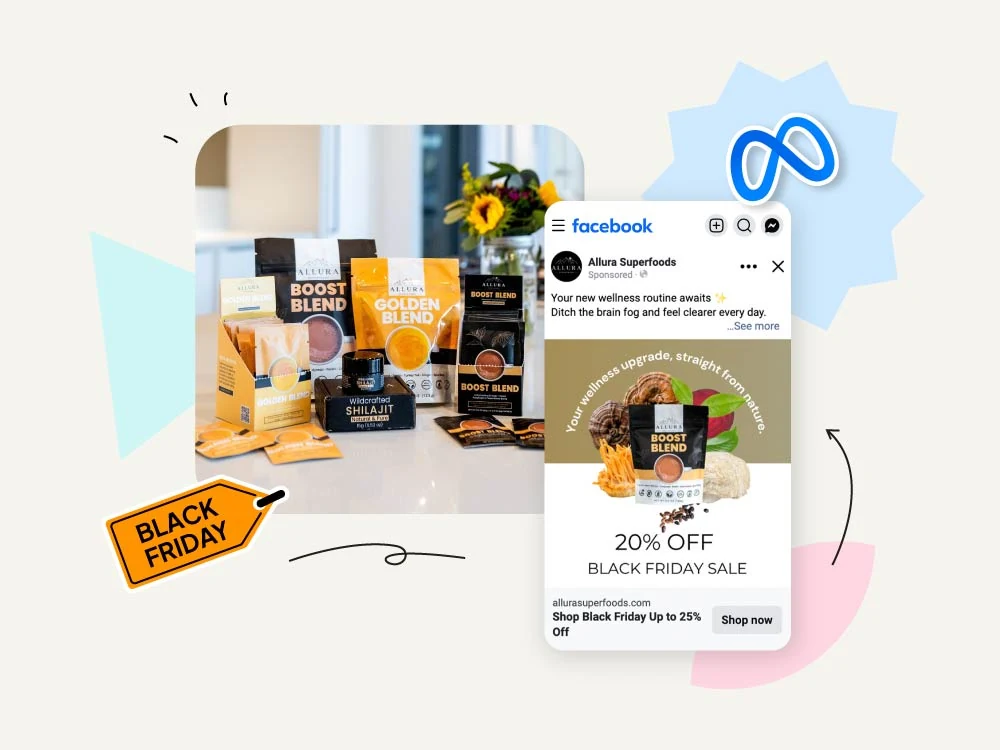
Client Success Story: How Allura Superfoods Achieved a 9.6x ROAS on Black Friday With Meta Ads
Allura Superfoods partnered with StoreLab towards the end of 2024, opting for our Meta ads plans to focus on acquiring new, high-quality customers.
With a strong base of loyal customers already in place, the priority was expanding reach and introducing the brand to new audiences in a way that was both sustainable and profitable.
A key opportunity to achieve this goal was the Shopify Black Friday Cyber Monday 2025 weekend, since shoppers are primed to spend and specific audiences are actively looking for deals on products to enhance their wellbeing.
This period offered the chance to not only gain new customers across the weekend, but also build long-term relationships and repeat engagement.
While the target ROAS was set at 3x, the campaigns delivered results that went far beyond expectations, achieving an impressive 9.63x ROAS!
This performance shows that when campaigns are thoughtfully planned, audiences are carefully targeted, and offers are communicated clearly, brands can stand out - even in the most competitive sales periods.
Read the full case study here.
Final Thoughts
We hope this guide has given you some practical insights on how to prepare ahead of Black Friday 2026 and make it your most successful one yet. The key is to start early, test your strategy in advance, and make sure every part of your store is ready before the rush begins.
Getting ahead now gives you more time to optimise, improve the customer experience, and stand out from competitors. For more guidance, read our article, Shopify Black Friday Cyber Monday: The Ultimate Marketing Guide, or get in touch with a member of our team who’ll be happy to offer advice, answer your questions, and help you prepare for the key sales weekend.

Skyrocket your Shopify sales with a no-code Apple & Android mobile app. Available now on the Shopify app store.







.webp)

