

Shopify landing pages are one of the most powerful tools for turning traffic into paying customers. But the way your landing pages are strategized, designed, and created is often the difference between traffic that bounces and traffic that actually converts.
You can have great ads, strong products, and steady visitors - but if your landing page isn’t built with intention, you’ll lose people before they ever get to checkout.
In this guide, we’ll break down exactly how to design Shopify landing pages that actually convert. Here’s what we’ll cover:
- What Shopify landing pages are and how they work
- Why landing pages are so important for increasing sales
- What makes a high-converting Shopify landing page
- Best practices for designing landing pages that convert
- Where and how to build Shopify landing pages
- Examples of high-performing landing pages
Let’s jump right in…
What are Shopify Landing Pages?
A Shopify landing page is the page a visitor lands on after clicking through from somewhere, whether that’s an ad, social media post, an email, a web link, or something else.
In the simplest terms, a landing page is just the first page someone arrives on when they visit your site, so it can be a shopper’s first impression of your brand.
While any page can act as an entry point, in marketing a landing page is created with clear intent. It’s built as a dedicated starting point for visitors with a single focused goal - whether that’s encouraging a purchase, getting someone to sign up for a subscription service, or persuading them to claim a discount.
The strongest, best-performing landing pages are focused, intentional, and streamlined, with a clean structure that guides visitors toward a single conversion goal. Rather than trying to achieve multiple things at once, they’re built around one clear action, and they execute it effectively. Then every element on the page, from the headline to the call-to-action (CTA) is designed to support and reinforce that goal.
That’s why landing pages are such a powerful tool. They remove distractions, guide the visitors' attention, and make it easier for them to take the next step, helping you generate more leads and increase your conversion rate.
What's the difference between landing pages and product pages?
You might be wondering how landing pages differ from product pages. Well, product pages are just as important, but they’re built to provide detailed information - things like product specs, imagery, variants, reviews, features, and pricing - everything a shopper might need to confidently decide whether to make a purchase. They often also link back to collections and highlight other products to encourage further browsing.
Landing pages, on the other hand, are much simpler and more direct. While they’re still beautifully designed and thoughtfully built, they strip things back to guide visitors toward a single conversion goal, with every element chosen specifically to support that action.
.webp)
Why Use Landing Pages on Shopify - Importance & Significance
Landing pages for Shopify stores play a crucial role in turning traffic into high-quality customers, and one of their biggest strengths is improving conversion rates. Because landing pages are built with clear purpose and a simple layout, they make it easier for customers to quickly understand what’s being offered and why it matters, which naturally leads to more sales and conversions.
They’re also really effective when paired with paid ads, email marketing campaigns, or social media traffic. By matching the message in your campaign with a dedicated match, you create a smooth, consistent journey from click to conversion, which can significantly improve return on ad spend (ROAS).
Another key benefit of landing pages on Shopify is that they reduce a lot of the friction that ecommerce shoppers face. For example, with fewer distractions like unnecessary navigation or competing product links, visitors are more likely to stay focused and move toward purchase without getting sidetracked.
They also allow for much more targeted marketing - this is so important since 71% of customers expect a personalized experience. You can create different landing pages for your Shopify store based on specific audiences, products, or campaigns, helping you deliver this relevant and personalized experience for each visitor.
On top of that, they make performance tracking much clearer. Since each page is tied to a specific goal or campaign, you’re able to see what’s working, what’s not, and how to optimize your marketing efforts using real, valuable data.
Having dedicated landing pages is also excellent for lead generation, especially when paired with offers like discounts or exclusive access. Plus, their structured format allows you to tell a focused story that builds trust, highlights value, and gently guides visitors toward conversion.

What Makes a High-Converting Shopify Landing Page?
Creating a high-converting Shopify page isn’t just about looking good, it’s about having the right structure, message, and user experience working together to guide visitors toward action. Here are the 5 core elements you’ll need to consider before building your landing pages:
1 - Well-defined goals
Every successful landing page starts with a clear objective. Whether the goal is to sell a product, promote a bundle, or generate signups, everything on the page should support that one outcome. When the goal is specific, it actually makes your job easier. It gives you clarity on what needs to be included in the design and makes it much simpler to measure success.
2 - Clear value proposition
Within seconds of landing on your page, visitors should be able to understand what’s being offered and why it matters to them. A strong value proposition and unique selling points (USPs), highlight the min benefits of the product or offer in a subtle, yet compelling way, helping shoppers quickly see why they should care.
3 - Knowing who you’re audience is & why you’re targeting them
Effective landing pages are built with a specific audience in mind. Understanding who you’re speaking to - and what they need, want, or struggle with - allows you to tailor the messaging so it feels relevant, personal, and persuasive.
This also means thinking about demographics, such as age, location, gender, or lifestyle, and how these factors influence what your audience responds to. And then also considering purchase intent: such as first-time buyers who need more reassurance, past customers who might be ready for upsells, or high-intent shoppers who are already close to making a purchase and just need the final push to convert.
4 - Strong, value-driven messaging
Messaging should be clear, focused, and benefit-led, and it’s important not to dilute the message with unnecessary fluff, information, or mixed signals. Every line of copy should reinforce the core value.
5 - Great user experience & design
Like with your other marketing channels, design plays a huge role in conversions. A high-performing landing page loads quickly, works smoothly on mobile devices, and follows a logical flow that naturally guides users through the content. When the experience feels seamless and intuitive, visitors are far more likely to buy.

Best practices for creating & designing Shopify landing pages
Use high-quality visuals & clear messaging
The first best practice we’d recommend following is using high-quality visuals and messaging that work together to communicate value. Product imagery should show real-world use, so customers can quickly understand what the product is and how it fits into their lifestyle. This should be paired with concise, purposeful copy that supports the visuals (not competing against them), and keeps the page easy to scan.
Use persuasive and relatable product storytelling
Strong landing pages go beyond just listing features, they create a story around the product. Through cohesive content, you can guide visitors through a relatable journey: the problem your audience might have, the solution you offer, and the outcome from your products. This helps customers emotionally connect with the product and see its value in context.
Highlight clear and compelling unique selling points (USPs)
With so much competition, what will really make you stand out?
Your USPs are what set you apart, so they should be communicated early and clearly. Whether it’s sustainability, multi-functionality, premium craftsmanship, or a strong brand reputation, the key is to make it completely obvious why your product is different and worth choosing over competitors.
Outcome-focused messaging (benefits over features)
Instead of focusing purely on what the product does, highlight what it means for the customer. Translate features into real benefits that show how the product improves their experience, solves a problem, or adds convenience. This makes your messaging far more persuasive and relatable.
It can be tempting to focus heavily on how amazing your product is, but it’s important that your first thought is always the customer. They’re constantly being bombarded with other product offers, so you need to clearly show why yours is the best solution for them, not just why it’s a great product.
Have Strong CTAs (Calls-to-Action)
Your CTAs should guide users clearly toward the desired action or next step, without hesitation or confusion. Use language like “Shop Now”, “Get Yours Today”, or “Claim Your Offer”. Placement also matters - CTAs should appear naturally throughout the page, not just at the end, so visitors always know what to do next.
Authentic Social Proof
People trust other people more than brands, which is why social proof is essential. In fact, consistent social proof can increase revenue by 62% per customer.
This can include written reviews, video testimonials, influencer content, case studies, or user-generated content (UGC) from social media. The more authentic and varied the proof you include on your landing pages, the stronger the trust you build with potential customers.
Showcase Trust Signals
Trust signals help remove doubt and reassure visitors that they’re making a safe purchase, especially when a customer lands on the page impulsively after clicking through from an ad, where trust hasn’t yet been built.
These include secure payment icons, shipping and return guarantees, awards badges, certifications, and visible star ratings. Even small details like “money-back guarantee” messaging can significantly increase confidence and reduce hesitation.
Urgency and Scarcity-Driven Conversion Triggers
Urgency-based elements encourage customers to act sooner rather than later. Examples are messages like “selling fast”, low stock warnings such as “only 10 left”, limited-time offers, or countdown timers for promotions. When used subtly, these triggers induce FOMO (fear of missing out), which helps reduce purchase procrastination and encourage sales.
SEO & AI-search engine optimization
Optimizing your landing pages for SEO and AI discovery ensures they can actually be found by the right audience. This involves using clear headings, relevant keywords, structured content, and descriptive copy that search engines and AI tools can easily interpret. A well-optimized page will convert better, but also bring in more qualified traffic over time which is super valuable.
.webp)
Where & How to Build Shopify Landing Pages
Shopify’s Own Functionality
Shopify does allow you to create landing pages using its built-in page editor and theme customization tools, making it a great starting point; especially if you want to keep everything native and easy to manage.
One of the main benefits of building landing pages on Shopify is how smoothly it integrates with the rest of your store. Your landing pages will automatically match your branding, product data, and checkout experience, creating a consistent journey for customers. It’s also reliable, fast-loading, and doesn’t require any additional apps or costs, which is ideal if you’re just getting started.
You can also easily link products, collections, and other pages, making it simple to build out basic campaign pages or promotional content without needing technical skills.
However, while it’s useful for basic pages, it can feel quite limited when it comes to designing highly optimized, conversion-focused landing pages. Custom layouts, advanced elements, and testing capabilities are often restricted, which can make it harder to fully tailor pages for specific campaigns.
But landing pages work best when they’re simple, and if you’re just getting started, this is a great option. Whereas if you’d like to create a more tailored and in-depth page, there’s other options available, which we’ll share now…
Tools on the Shopify App Store like PageFly
If you want more flexibility, landing page builders like PageFly are a popular choice.
They allow you to go beyond basic themes and create conversion-focused landing pages, product pages, and more - without coding. You can use pre-designed templates or build pages from scratch with drag-and-drop, giving you much more creative control.
These tools also include CRO-focused features like pre-built sections, countdown timers, upsells, and integrations with review and personalization apps. Plus, with A/B testing and analytics integrations, you can continuously refine your pages to increase sales.
Partner With a Shopify Growth Service like StoreLab
One of our core services at StoreLab is designing high-performing websites, landing pages, and product pages that are built to increase sales and improve the overall customer journey.
By working with us, you’re putting your store in the hands of experts who understand how to optimise for conversion, remove friction, and create a smoother path from discovery to purchase.
Here’s an example of how we approached this with Melania Clara:
When it came to the landing page and website design strategy, the focus was simple: reduce friction, improve clarity, and make it easier for Melania Clara’s customers to find, explore, and purchase.
We streamlined the homepage to create a more intuitive journey. Navigation was simplified so users could get where they needed faster, and the opening section was refined to focus on one clear message with a strong call-to-action, giving customers immediate direction.
We also improved product discovery by making categories and bestsellers more visible, helping both intent-driven shoppers and browsers find what they were looking for more easily.
Across the site, we removed unnecessary steps and simplified the journey from discovery to purchase. Key brand USPs were brought forward to build trust and support quicker decision-making.
On the product pages, the focus was on clarity and conversion. Reviews, pricing, and key product benefits were made easier to scan, while additional imagery helped customers better understand the product before buying.
Everything was guided by ongoing CRO testing and data, resulting in a smoother experience that improved both navigation and performance across the store.
Alongside this, Melania Clara also worked with us on mobile app, email, UGC, and paid ads. This combined approach delivered strong results:
🚀774% increase in sales
💰488% increase in orders
📈388% higher conversion rate
Looking for the same results as Melania Clara? Book a call with one of our friendly experts to find out how we can help your brand achieve the growth it deserves.
Best Shopify Landing Pages Example
Frank Body - Original Coffee Scrub
Frank Body is one of the leading health & beauty brands on Shopify, and their Original Coffee Scrub has been performing consistently well for years - and it’s still trending even now! So what’s bringing that success? Let’s take a look at why their landing page for this product works so well…
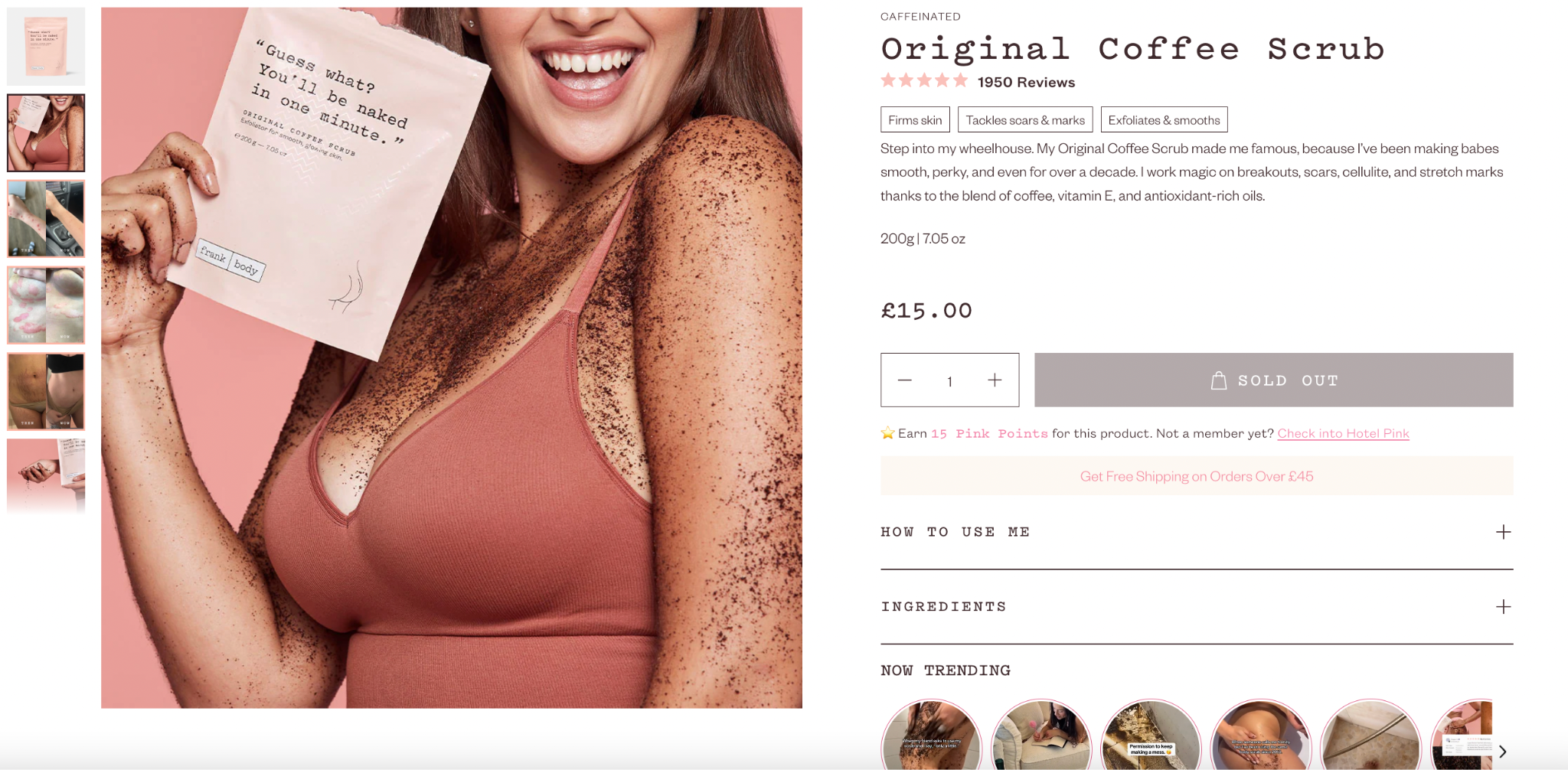

The landing page starts with high-quality, relatable product photography that immediately grabs attention and shows the product in a real-world context. From there, the copy highlights the product’s key USPs and the benefits it delivers, helping to build interest and move people closer to purchase.
The page then builds trust through elements like reviews, badges, testimonials, free shipping thresholds, loyalty rewards for repeat purchases, FAQs, and trending social videos featuring the product. It’s a nice mix of reassurance and engagement, combining lifestyle appeal with practical details.
Overall, it’s designed to look great while still being highly functional, blending those “nice-to-have” features with clear health benefits that helps bring conversions.
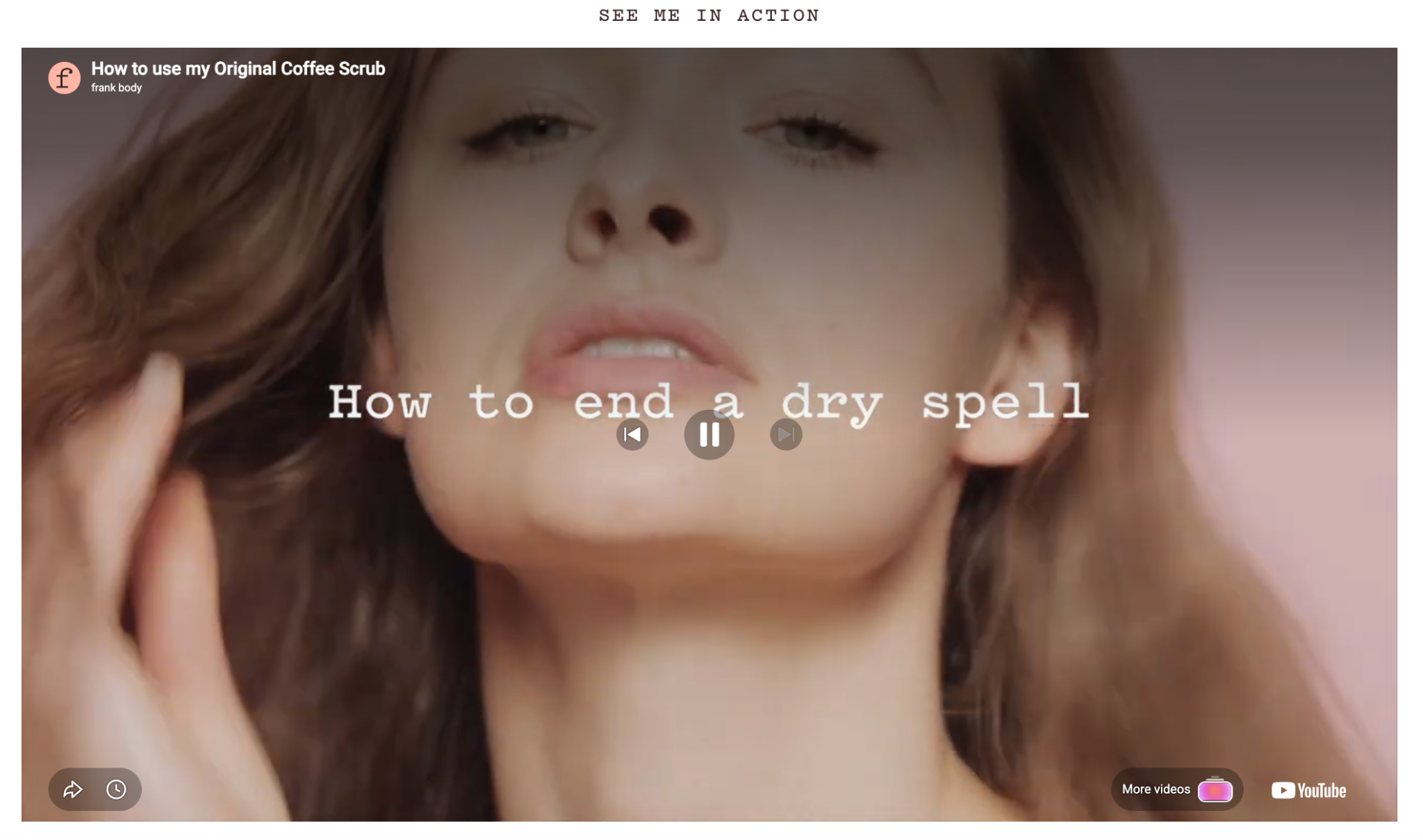
The next scroll introduces a short 30-second product video that shows how to use the product. It’s designed to quickly build desire while keeping things simple and visually appealing. In fact, including a video on a landing page can boost conversion rates by up to 80%.
It also shows exactly what the product looks like in real life, whether that’s on the skin or in use, which helps set clear expectations. This is really important for reducing returns and disappointment, because shoppers know exactly what they’re getting and how the product actually works before they buy.
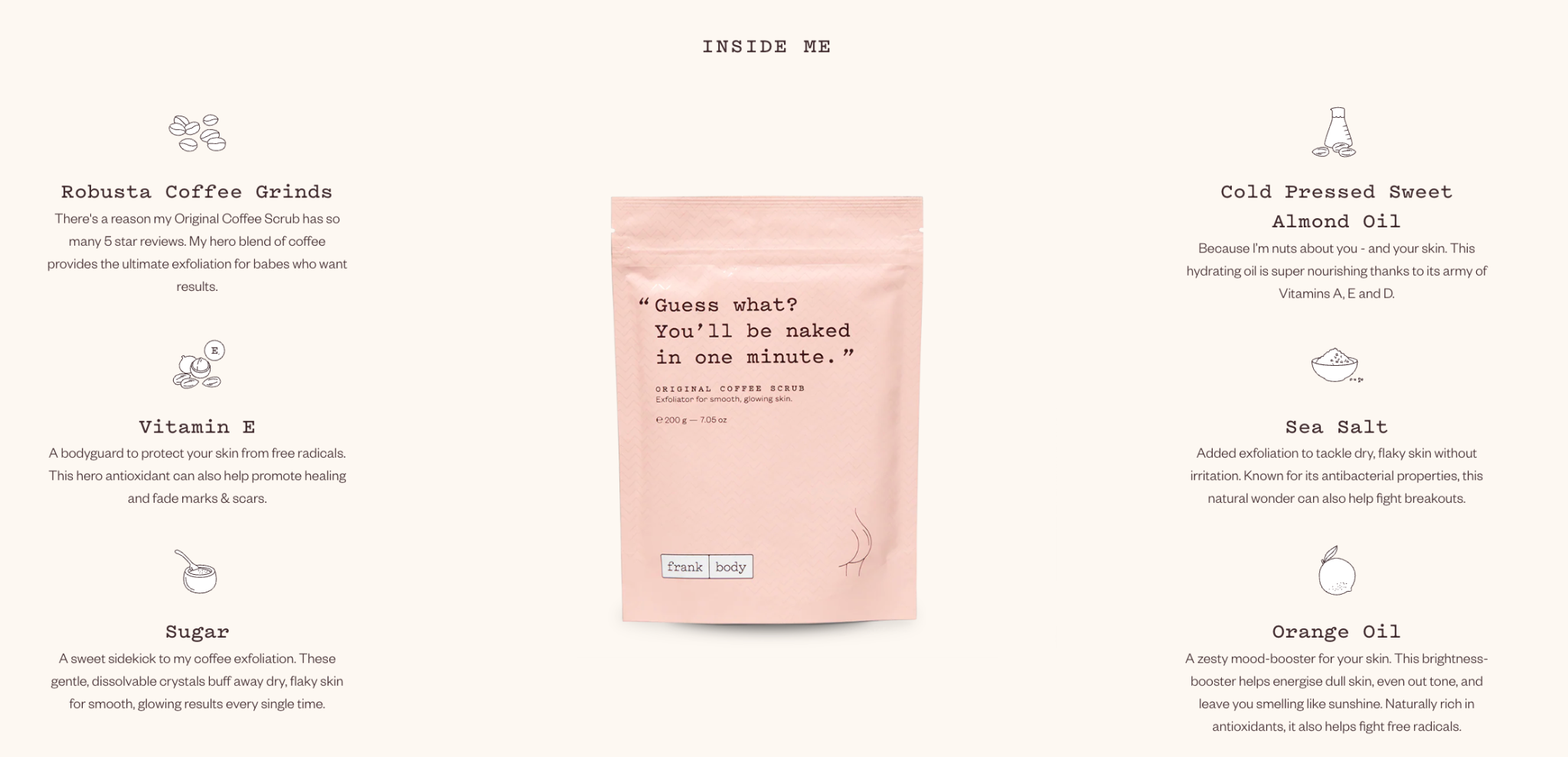
Next comes a section focused on transparency - clearly breaking down exactly what’s in the product and what benefits it will bring to the buyer’s life. The copy is designed to be smart and witty, while still being informative, keeping it aligned with the brand’s tone of voice and building trust and excitement at the same time.
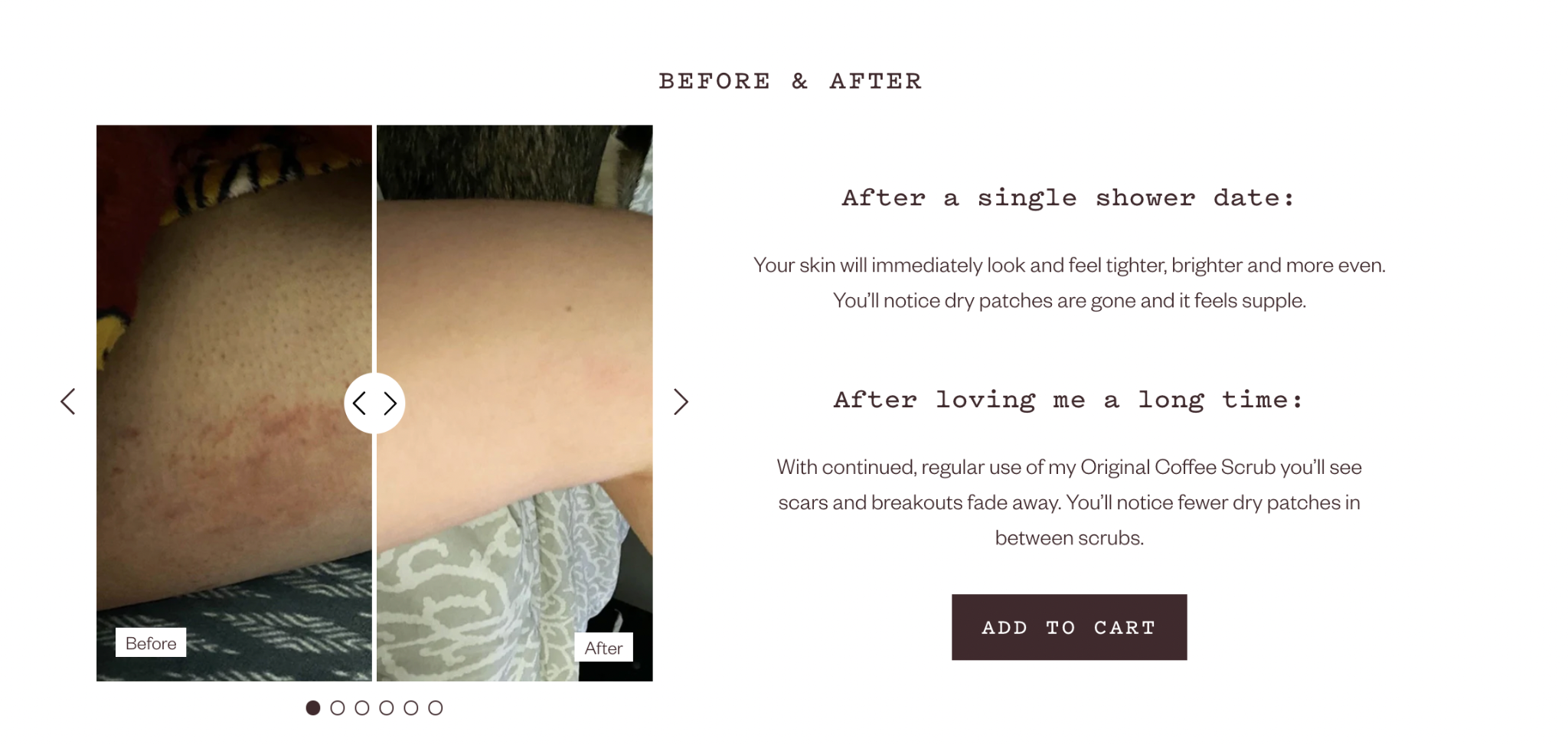
The landing page then moves into real-life before and after shots, showing how the product has made a difference for other customers. This section can be especially persuasive, as it helps people visualise the potential results for themselves; particularly those who may be dealing with similar skin concerns or conditions to what’s shown in the images.


Next comes a large social proof section, featuring social media content, user-generated content (UGC), and real-life product images. It’s designed to feel authentic and relatable, showing the product being used by real people in everyday settings.
This is followed by a strong collection of reviews, which are especially powerful because they’re highly specific - customers often include their exact skin type and explain how the product has helped them. This level of detail makes the feedback feel more credible and helps potential buyers see themselves in the results.
What’s more, 92% of consumers hesitate to buy when no customer reviews are available. So if your Shopify landing pages don’t include a review section, that’s a lot of sales you’d be losing!
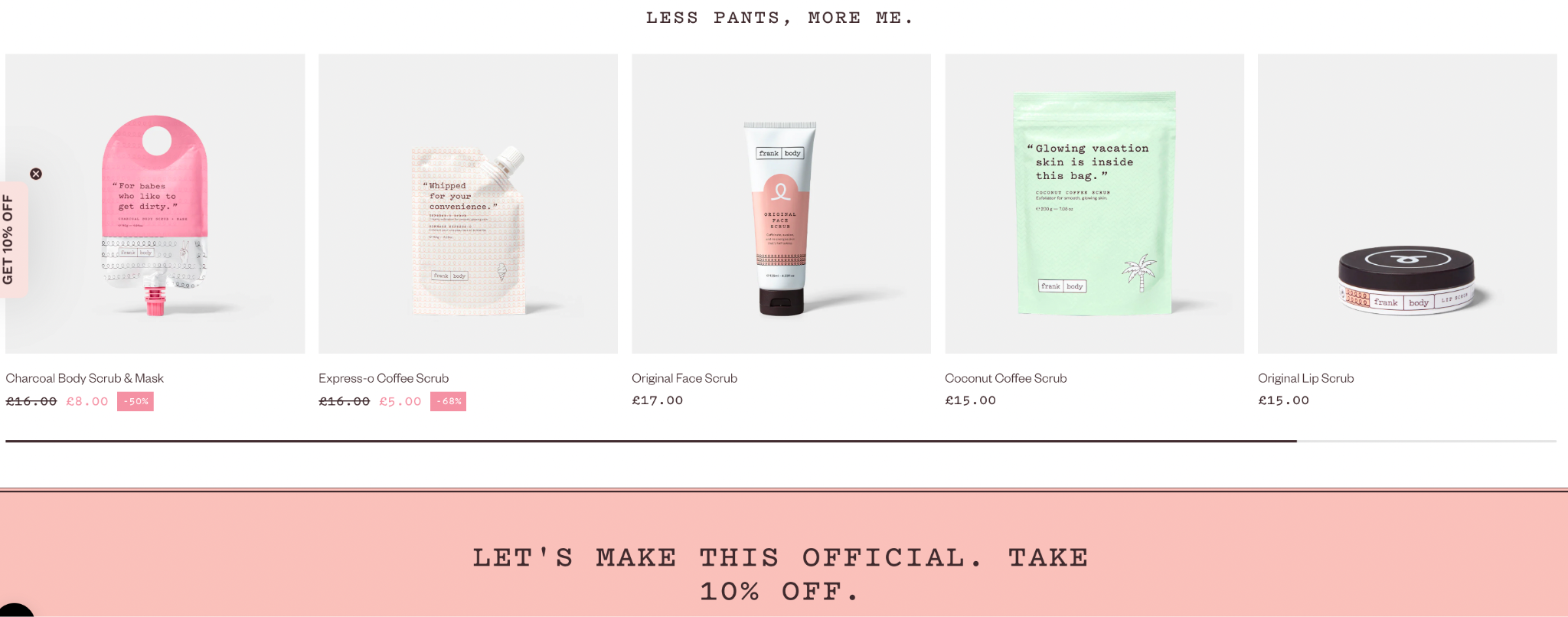
Towards the end of the page, there’s further opportunity to grow sales and increase AOV with an upsell and cross-sell section. This highlights complementary products that customers may not have discovered or considered otherwise, helping to naturally expand the basket size.
Finally, there’s one last incentive to convert: 10% off the first order when signing up to the newsletter. This gives visitors a final nudge to buy now before leaving the page.
Final Thoughts
If you’d like help creating high-converting landing pages for your Shopify store, our team at StoreLab is here to help! Book a friendly chat with one of our experts, we’d love to learn more about your brand and how we can help your business see the success it deserves.

Skyrocket your Shopify sales with a no-code Apple & Android mobile app. Available now on the Shopify app store.







.webp)

