

For Shopify stores, especially those in fashion, makeup, skincare, and other lifestyle categories, Halloween can be a great chance to drive more conversions throughout October - and you don’t need to sell costumes or Halloween-specific products to get involved.
With Halloween trends, outfit ideas, and seasonal inspiration taking over social media, there’s plenty of ways to give your existing products a seasonal angle and tap into what your customers are already interested in.
Whether you sell Halloween products already or simply want to make your existing range feel more relevant, there’s opportunities to attract new customers, re-engage existing ones, and ultimately increase conversions. Either way, there’s plenty of ways to make Halloween work for your store.
These 10 Halloween marketing strategies for Shopify stores are designed to help you boost conversions and increase AOV, while also building stronger customer relationships that can bring in repeat sales long after Halloween is over.
1. Turn Halloween Into a Customer Acquisition Opportunity
Halloween can be a great opportunity for Shopify stores to reach new customers - as well as people who may already have come across your brand but haven’t quite been persuaded to buy yet.
One place to start is with Halloween-specific landing pages and product collections to draw in new, high-quality organic traffic. Think about what your potential customers might actually be searching for in the run-up to Halloween and build relevant pages around those terms. Whether it’s Halloween gifts, party essentials, decorations, costumes, makeup, or special-edition products, creating dedicated seasonal pages can help you capture more search traffic while giving shoppers a more relevant path to purchase.
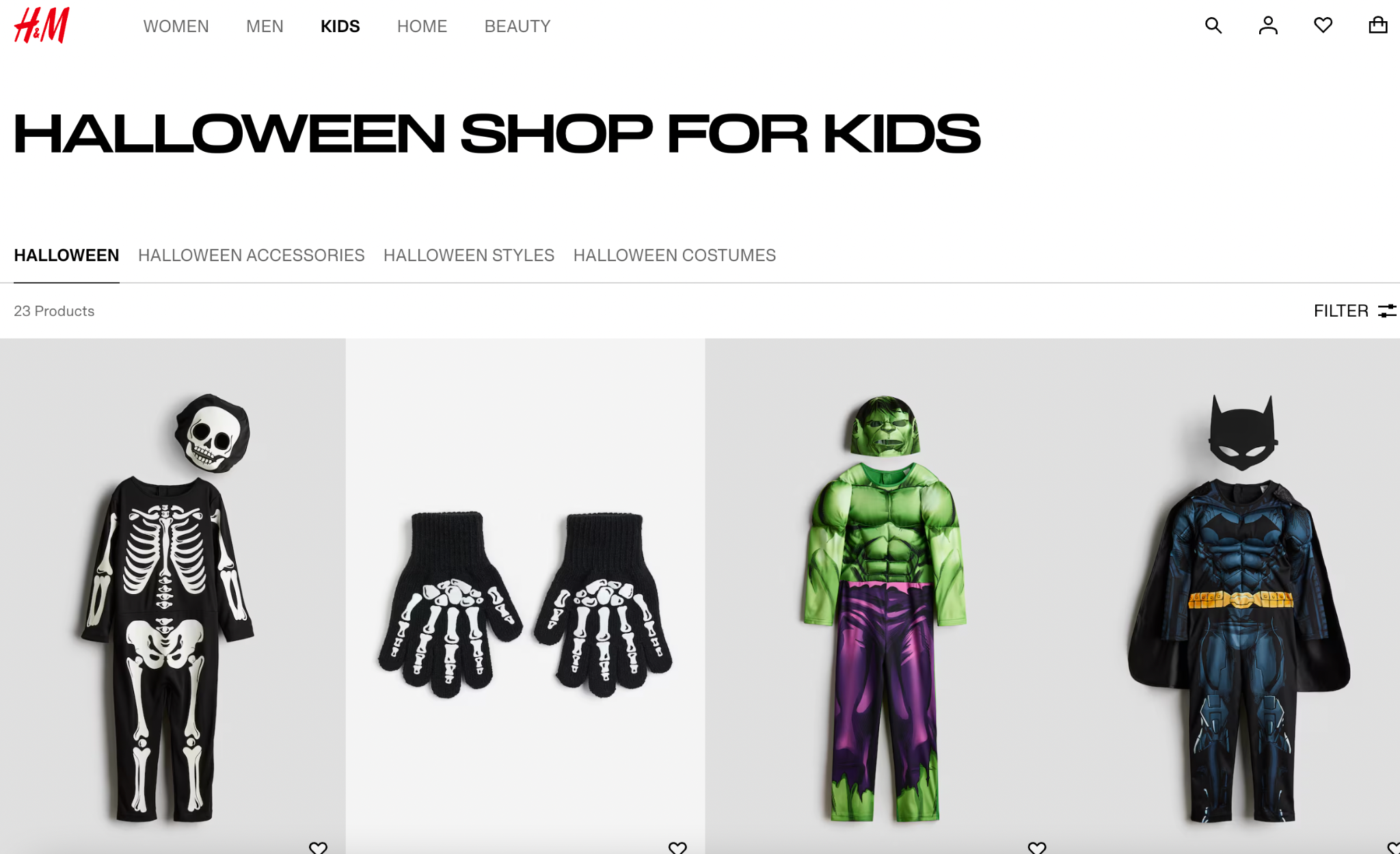
H&M is a well-known fashion brand year-round, but by creating a dedicated collection called “Halloween Shop for Kids”, they make it easier for customers to discover their Halloween products through search. This increases the likelihood of appearing in relevant search results, helping both existing and potential new customers find the collection who may not have discovered it otherwise.
Look at the trends your target audience are already engaging with and find ways to make your products part of them. The key is to make your content feel useful or entertaining rather than like another sales pitch.
And don’t forget that your existing customers can help you bring in new ones, too. Referral incentives can work particularly well around seasonal campaigns. For example, you could offer existing customers a £10 voucher for referring a friend during the month of October. It gives loyal customers a reason to share your brand, while giving new shoppers an incentive to make that first purchase.
The best part? A good Halloween acquisition strategy doesn’t require you to completely reinvent a new marketing strategy. You’re just finding subtle but effective reasons for people to discover, revisit, and buy from your store. Now we’ve covered acquisition, let’s look into retention.
2. Focus on Customer Retention Tactics
Many Shopify store owners make the mistake of thinking that key seasonal and sales events like Halloween are only about attracting new customers. But a deeper potential lies in re-engaging people who’ve already bought from your store and giving them a reason to come back.
Start by segmenting your existing customers and tailoring your Halloween marketing to them. For example, you could recommend Halloween products based on what they’ve purchased previously, or create different offers for frequent customers, lapsed customers, and recent shoppers. The more relevant the message, the more likely it is to catch their attention.
You could also introduce a Halloween-themed loyalty incentive. This could be as simple as offering bonus points when customers purchase from your seasonal collection, or giving loyalty members an exclusive reward during October. It’s a small but effective tactic, as it can give shoppers that extra reason to choose your store because they are getting added value from their purchase.
And make sure to not overlook what happens after someone places an order. The post-purchase journey is an important part of retention, particularly for customers who’ve discovered your brand for the first time during Halloween. Thank customers for their purchase via email, recommend complementary products or send them useful content, such as product guides or inspiration for getting the most out of their purchase. You could also include an incentive for their next order to encourage them to return.
So it’s important to think beyond Halloween itself. If you acquire a new customer during October, what will you do to keep them engaged in November and beyond? A well-planned follow-up strategy can help turn a one-time buyer into a repeat customer, rather than letting that first Halloween purchase be their only interaction with your brand.
3. Consider a Partnership to Expand Your Reach
Halloween is the ideal time to team up with another brand and get your products in front of a new audience. The trick is to find a brand with a similar target customers, but one that sells complementary rather than competing products.
For example, a makeup brand could partner with a clothing brand to create a Halloween-themed campaign, maybe around putting a look together for a costume party. Both brands can introduce each other to their existing audiences, which means there’s potential reach to customers who may not have discovered your store otherwise.
Another popular idea is to create a joint Halloween bundle or giveaway, then promote it across both brands’ marketing channels. This could include email campaigns, social media posts, and website promotions, effectively doubling the potential reach of your campaign without either brand having to build an audience from scratch.
A great example of this is Beauty Guild, who partnered with Mii Cosmetics on a Halloween giveaway. The campaign is particularly engaging, as followers are encouraged to create their best Halloween look for the chance to win. This not only drives audience participation but also allows both brands to reach and engage with each other’s audiences, while giving them an equal opportunity to showcase and promote their products and offerings.
And partnerships don’t have to be limited to other ecommerce brands. Creators and influencers can also help you reach new customers through engaging, Halloween-specific content like a “get ready with me” video featuring your products.
86% of consumers make at least one purchase a year inspired by an influencer, while 49% make influencer-inspired purchases at least once a month. That’s a HUGE amount of potential sales you don’t want to let slip through your fingers.
It’s important to choose partners whose audience genuinely overlaps with your target customer. And a smaller, highly relevant creator or complementary brand can often be more valuable than a much larger audience with little connection to what you sell.
4. Add Relevant Shopify Apps to Your Storefront
Seasonal campaigns can be a lot for store owners to juggle. From creating promotions and updating your store to keeping up with customers and analysing what’s working, there’s plenty to stay on top of. The good news is that you don’t have to do everything manually. Adding a few well-chosen Shopify apps can take some of the work off your plate and make your Halloween campaign easier to manage.
The apps you choose will depend on your goals. If you’re running a genuinely time-limited Halloween offer, a countdown timer such as Essential Countdown Timer Bar can add urgency and encourage shoppers to act before the promotion ends.
Looking to increase your average order value? Bundle and upsell apps such as BOGOS: Free Gift & Bundle Upsell or Selleasy can help you create product bundles, offer free gifts, or suggest complementary products at checkout.
You can also use reviews and social proof to give new customers the confidence to buy from you across Halloween, and in the future. Apps such as Judge.me can showcase product reviews, while Instafeed can bring authentic UGC content onto your store and product pages.
For customer retention, email and SMS platforms such as Klaviyo or Omnisend can help automate Halloween campaigns, abandoned-cart reminders, and post-purchase messages.
You could also consider using StoreLab’s no-code Shopify mobile app builder to improve your store’s mobile experience and make use of push notifications - something we’ll explore in more detail in the next section.
And analytics tools, including Shopify Analytics and heatmap platforms such as Lucky Orange, can help you understand how shoppers are interacting with your website across the Halloween period.
The key is not to install every app you can find. Start with the problem you want to solve, and then find an app that can help you solve or manage it. A few useful tools can make a much bigger difference than a store slowed down by unnecessary apps.
5. Get a Mobile App For Your Shopify Store
A Shopify mobile app can give you a really direct way to reach customers, and also makes the shopping experience much smoother - a win win all around.
Your app sits on your customer’s homescreen, making your store just a tap away whenever they’re ready to shop. You can also use push notifications to cut through the noise and promote limited-time Halloween offers, remind customers about abandoned carts or let them know when a seasonal collection has launched. You could even offer app-exclusive incentives, such as “Download our app for free shipping” or “Get 10% off our Halloween collection".
There’s a strong conversion argument for Shopify mobile apps, too. Mobile apps have been found to have a 157% higher conversion rate than mobile websites, while 85% of consumers say they prefer apps over mobile sites. Apps can also help reduce distractions during the checkout journey, while fast loading times make it easier for shoppers to move from browsing to buying.
And it’s not just about speed and convenience. Shopify mobile apps can use customer data, including browsing behavior and previous purchases, to provide more personalized product recommendations. Helping customers find relevant products more quickly can improve both conversion rates and AOV.
Many Shopify brands, including our clients at StoreLab, also use their mobile apps to offer perks such as early access to sales and exclusive discounts during shopping periods like Halloween.
At StoreLab, we build and manage mobile apps as part of our Shopify growth service, including push notification creation and strategy. Combined with our other services such as Meta ads and creative direction, this can help Shopify brands build a stronger system for increasing conversions, AOV, and retention - not just during Halloween, but throughout the year.
After partnering with our Shopify Growth Service at StoreLab, Jewelry brand Melania Clara saw a 388% increase in conversions and 50% increase in ad revenue.
Would you like to see results like these for your Shopify store? Book your growth call.
6. Allow Data to Shape Your Shopify Halloween Marketing
It can be tempting to only look at what worked for your store last Halloween and simply repeat it. But while last year’s data is useful, your customers may be behaving very differently this year. The best Halloween strategy combines historical data with what’s happening in your store right now.
Start by looking at last year’s performance. Consider your revenue, conversion rate, AOV, best-selling products, traffic sources, and customer acquisition costs. This gives you a useful benchmark, but don’t stop there. Look at the previous few months to see what’s performing well today, instead of just what was performing well a year ago.
For example, if bundles worked well last year, that could be a good indication that a Halloween bundle is worth testing again. And if a particular product has recently become a bestseller, consider making it a key part of your Halloween campaign. You can also look at which marketing channels are currently bringing in your highest-converting traffic, alongside abandoned-cart and checkout data, to identify opportunities to improve conversion. It’s also worth testing different offers rather than assuming the biggest discount will generate the most sales.
Set clear KPIs before the campaign, such as the metrics mentioned above, so you can measure what actually worked.
And don’t leave your planning until the last minute! Around 49% of consumers say they begin shopping for Halloween in September or earlier, so getting your strategy, creative, and campaigns ready ahead of time gives you a better chance of capturing that early demand.
Once Halloween is over, review the results. What worked? What didn’t? These insights can then feed directly into your Shopify Black Friday Cyber Monday and wider Q4 strategy, helping you make better decisions for the rest of the peak shopping and sales season.
7. Give Your Products a Halloween Twist
You don’t necessarily need to launch an entirely new product range to boost conversions across Halloween. In many cases, it’s about finding simple ways to make the products you already sell feel relevant to the season.
Start by asking: “How can we give our existing products a Halloween twist?” That could mean creating a limited-edition product, seasonal variant, or themed bundle where it makes commercial sense. For example, a skincare brand could introduce Halloween or Autumnal packaging for some of its existing bestsellers, rather than developing completely new products from scratch.
Limited-edition products can also create a sense of urgency and exclusivity. If you genuinely have a limited quantity available, make that clear to customers. Knowing that a product won’t be around forever can persuade shoppers who might otherwise wait to make a purchase.
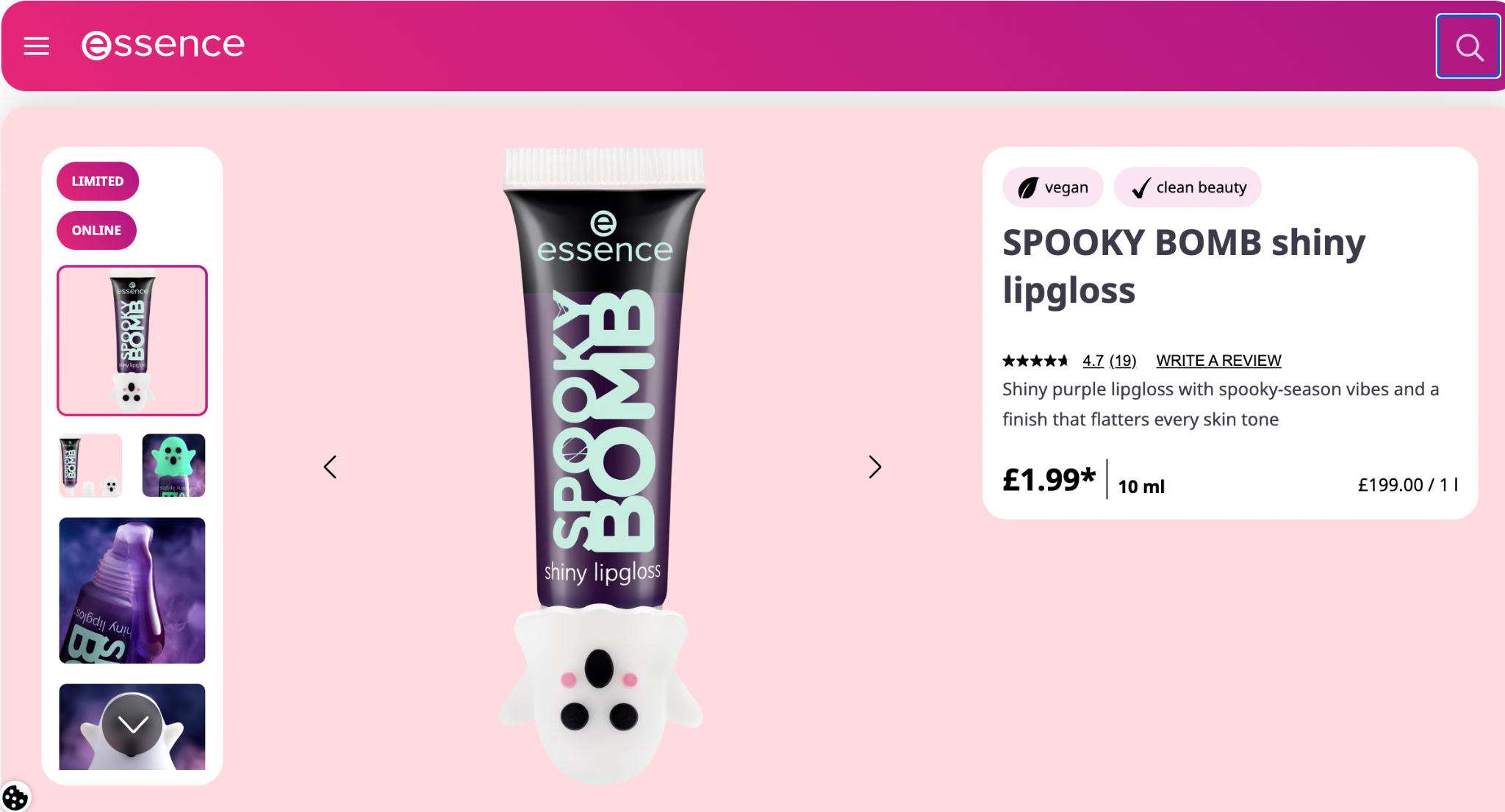
This year, makeup brand Essence kept things simple by introducing a limited-edition Halloween version of their existing Shiny Lip Gloss, giving the popular product a twist.
You can also make your existing products feel more seasonal without changing the product itself. Halloween-themed packaging, gift wrapping, or an insert included with orders can all add a festive touch without requiring a significant investment in product development.
There’s evidence that shoppers are interested in this type of exclusivity, too. 46% of Gen Z and 45% of Millennials would purchase special or limited-edition products, highlighting the potential appeal of seasonal launches.
Finally, make sure customers can actually find your Halloween products. Create a dedicated seasonal collection, feature it prominently in your navigation and homepage, and link to it from your marketing campaigns. There’s little value in making the effort to create a Halloween product if customers have to hunt around your store to find it.
8. Build a Promotion Strategy Around Halloween
Halloween tends to be more product-led than discount-led, particularly for brands selling seasonal products or creating limited-edition collections. But that doesn’t mean you can’t use promotions to encourage customers to convert - it’s about choosing the right offer for your products and your margins.
Rather than automatically putting your whole store on sale, think about different ways you can add value. Bundles, BOGO offers, tiered discounts, free gifts, free shipping, and spend-and-save promotions can all give customers an extra reason to purchase without relying on a blanket discount.
For example, you could offer a free Halloween-themed gift when customers spend £50, or create a “buy two, get one free” promotion across selected products.
You could also introduce a flash sale or limited-time offer to create a moment of excitement. However, use these sparingly. If customers see a constant stream of promotions throughout October, the urgency quickly disappears - and you may end up training them to wait for the next discount.
It’s also worth thinking carefully about where you apply your promotions. Discounting selected products, older stock or a specific Halloween collection can help protect your margins, rather than reducing the price of products customers may have bought anyway.
Ultimately, your promotion strategy should complement your Halloween product strategy. Give customers a compelling reason to buy, but make sure the offer works for your business too. A promotion that drives loads of sales across Halloween but eats into your profit isn’t necessarily a successful campaign - you want conversions, but those sales need to be sustainable.
9. Make Your Ads Work Harder This Halloween
As one of the biggest seasonal shopping periods, Halloween is a busy time in ecommerce marketing, so it’s important to find ways to cut through the noise. When it comes to ads, the key is to make your targeting and messaging as relevant and personalized as possible, giving you the best chance of reaching the people most likely to convert.
Run ads featuring your Halloween collection, seasonal bestsellers, or limited-edition products, and make sure you’re also retargeting people who’ve visited your Halloween pages but haven’t converted. You can build audiences from previous customers and website visitors too, giving you a warm audience to work with alongside your prospecting campaigns.
It’s also worth testing different creative angles. Try product-led, discount-led, urgency-led, and lifestyle-focused ads to see what resonates with your audience. Video is particularly worth considering: 83% say video directly increases sales, and 82% of marketers say it delivers a good ROI.
Think about what each channel is best suited to, too. TikTok can work well for creator and influencer-style content, Instagram is useful for product-led and UGC content, while Meta can be effective for promotional messaging and retargeting. On Google, focus on the search terms people are actually using to find products like yours.
Your messaging should evolve as Halloween gets closer. Start with inspiration and product discovery, move into promotions, and then introduce more urgency with “last chance” messaging.
Finally, keep a close eye on CPA and ROAS. Halloween can bring plenty of traffic, but traffic alone isn’t sustainable. Put more budget behind the campaigns that are actually converting and generating a healthy return, rather than spreading your spend evenly across every channel.
Discover: Running Meta Ads for Shopify Stores: The 101 Guide
10. Add Some Seasonal Branding Touches
You don’t need to completely redesign your Shopify store for Halloween. A few small seasonal touches can be enough to make your brand feel more relevant and create a more immersive shopping experience. In fact, seasonal design trends have been reported to boost retail sales by as much as 40%.
Start with the areas customers are most likely to see. You could add subtle Halloween elements to your homepage, banners, navigation or product imagery, or introduce a seasonal color variation while keeping your core brand identity intact. Even something as simple as giving your Halloween collection a different name can make it feel more considered.
You can also carry the theme across your wider marketing. Try adding Halloween-inspired copy to CTAs, email, and social posts, or use seasonal photography and visuals in your content. If you’re sending out physical orders, temporary packaging, stickers, and inserts can add another small but memorable touch.
The important thing is to not go overboard. Your seasonal branding should complement your existing identity and make the shopping experience more engaging - not make it overwhelming to navigate your store.
Think about where a few subtle changes could have the biggest impact, while keeping your store fast, easy to navigate and recognisably yours. Done well, these small details can make your Halloween campaign feel cohesive across your website, marketing, and packaging without requiring a complete brand overhaul.
Final Thoughts
We get it - ecommerce is competitive. With so many brands selling similar products, standing out, attracting the right customers and turning them into loyal buyers takes more than simply having a great product.
If you’re here researching Shopify and ecommerce marketing, you’re already thinking about how to get better results - particularly during key shopping periods such as Halloween, Christmas, Boxing Day, Shopify Black Friday Cyber Monday, Valentine’s Day, and beyond. Building your marketing strategy around these moments can help you capture increased demand, drive more revenue and make the most of seasonal shopping behaviour.
But sustainable growth takes more than a handful of seasonal campaigns. You need a holistic strategy that looks at the entire customer journey - from getting shoppers to your store, to converting them and giving them a reason to come back.
That’s where StoreLab comes in. Our Shopify growth service is built around the three metrics that matter most in ecommerce: conversion rate, average order value (AOV) and returning customer rate. These metrics shape the services we provide, helping us identify where you’re losing potential customers, uncover opportunities for growth and build a strategy designed to deliver sustainable results.
If you’re ready to reach your next stage of growth, book a discovery call with the StoreLab team. We’d love to learn more about your brand, your goals and where we can help you grow.

Skyrocket your Shopify sales with a no-code Apple & Android mobile app. Available now on the Shopify app store.







.webp)

